Environment
Delhi air quality worsens ahead of Diwali, again

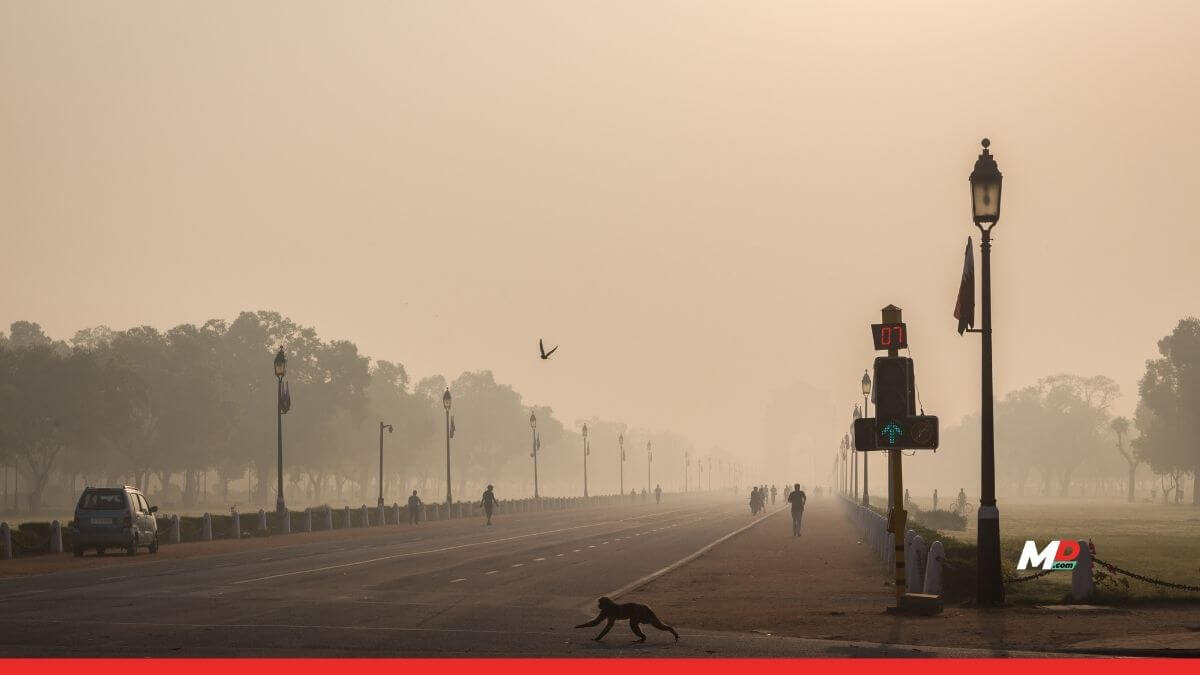
A toxic haze has once again settled over the National Capital Region, defining the inevitable collision between the celebratory traditions of Diwali and the annual public health emergency.
With the Air Quality Index (AQI) dipping to a deeply concerning 367, Delhi’s air quality remains in the ‘Very Poor’ category, severely impacting the respiratory health of millions and underscoring the failure of long-term pollution control policies. This environmental deterioration, marked by heavy smog and low visibility, has triggered immediate, yet controversial, responses from both the judiciary and the government.
The ‘Very Poor’ classification, as defined by the Central Pollution Control Board (CPCB), mandates strict adherence to emergency protocols under the Graded Response Action Plan. At an AQI of 367, the air quality worsens to a point where it is expected to cause respiratory illness upon prolonged exposure, particularly affecting vulnerable groups like children, the elderly, and those with pre-existing heart and lung conditions. This annual spike, which leaders like Manjinder Singh Sirsa noted marks the return of air pollution to Delhi ahead of Diwali, is driven by stagnant winter winds, vehicular emissions, and the smoke plume from regional stubble burning.
In the face of this recurring crisis, India’s apex court has chosen a path of compromise, allowing the use of ‘green crackers’—a supposedly less-polluting alternative—even as Delhi air turns toxic.
Developed by the Council of Scientific and Industrial Research – National Environmental Engineering Research Institute (CSIR-NEERI), these fireworks aim to reduce the environmental impact. The science behind them involves the elimination of banned chemicals like barium nitrate and the reduction of aluminum and sulphur content, yielding a 30 to 40 per cent reduction in particulate matter (PM) emissions compared to traditional firecrackers. Certified green crackers carry a distinctive QR code for verification, intended to differentiate them from their highly noxious counterparts.
However, experts widely dismiss this marginal environmental gain as inconsequential against the backdrop of the city’s already toxic air. Air quality researchers contend that a 30 per cent reduction in PM emissions becomes statistically meaningless when PM2.5 levels skyrocket by hundreds of percentage points during Diwali night.
Furthermore, the reliance on a certification system, which requires enforcement agencies to check for CSIR-NEERI logos and QR codes on every packet, has historically been flawed. The market is routinely flooded with counterfeit and non-compliant crackers, negating any potential benefit the court’s order sought to provide. Legalising the bursting of these crackers, even under tight regulation, is viewed by many public health advocates and observers as merely legalising heightened emissions during the festive period.
Faced with the immediate threat of a health emergency exacerbated by the upcoming festival, the Delhi administration is resorting to radical, short-term solutions. Reports confirm that cloud seeding in Delhi is likely to be initiated in the next two to three days. This emergency weather modification technique involves spraying hygroscopic materials, such as silver iodide or iodised salt, into suitable clouds to artificially induce precipitation, thereby washing out airborne particulate matter.
The pilot project, backed by research institutions like IIT-Kanpur, aims to provide temporary relief. Yet, the long-term efficacy and potential side effects of cloud seeding remain uncertain, particularly its ability to work reliably during the drier, colder winter months when pollution levels peak.
This expensive, last-resort intervention serves as a powerful symbol of the government’s struggle to move beyond reactive crisis management and implement sustained, enforceable policies to ensure clean air is a fundamental right, not an annual lottery dependent on court orders or artificial rain. The underlying sources of pollution, from vehicles to industrial emissions and crop residue fires, remain largely unaddressed, guaranteeing the repetition of this toxic cycle. After all, to expect different results when repeating the same mistakes of the past is folly.