

Politics
Mumbai Train blast : Bombay HC Frees All 12 Convicts After 18 Years

Key Highlights:
- Bombay High Court sets aside all convictions and death sentences in 2006 Mumbai train blasts case.
- Cites lack of credible evidence, questions prosecution witnesses and identification process.
- Orders release of all 12 convicts, subject to other pending cases.
- Maharashtra Government’s plea for death penalty confirmation rejected.
- Convicts languished in jail for 18 years; defence calls it a “historic miscarriage of justice corrected.”
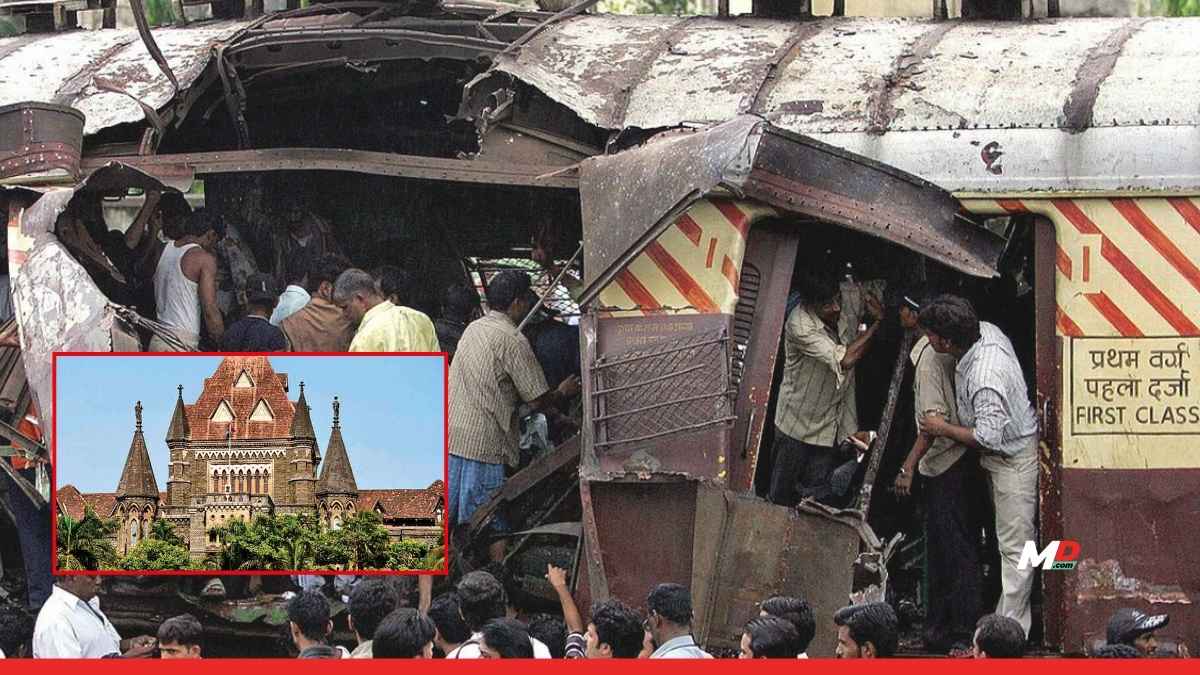
In a stunning reversal of one of India’s most high-profile terror cases, the Bombay High Court on Monday quashed all convictions and death sentences awarded in the 2006 Mumbai train bombings, delivering a landmark judgment that has shaken the foundations of the original investigation and trial.
Setting aside the special MCOCA court’s 2015 verdict, the special bench comprising Justices Anil S Kilor and Shyam C Chandak held that the prosecution failed to prove the charges beyond reasonable doubt. The court raised serious concerns over the credibility of key prosecution witnesses and procedural lapses in the Test Identification Parade (TIP), ultimately concluding that the accused could not be conclusively linked to the crime.
“It is unsafe to reach the satisfaction that the appellant accused have committed the offence… The conviction and sentence are liable to be quashed and set aside,” the bench observed, while directing the release of the convicts unless they are needed in any other pending cases. Each accused is to furnish a personal bond of ₹25,000.
The judgment comes after more than 75 hearings spanning six months and follows nearly two decades of incarceration for the accused — 12 men originally convicted for their alleged role in the coordinated bomb blasts that ripped through Mumbai’s local trains on July 11, 2006, killing 189 and injuring over 800 commuters.
The Long Legal Battle
Of the 13 initially accused, one was acquitted in 2015 by the special MCOCA court. Five others were sentenced to death (one later died in prison), and seven were given life terms. The case involved 250 witnesses and 169 volumes of evidence, with death sentence judgments running nearly 2,000 pages.
The state government had sought confirmation of the death penalties, while the defence appealed the verdict citing fabricated confessions and lack of substantive evidence. Defence lawyers argued that their clients were tortured into giving “extra-judicial confessions” and had been falsely implicated by the Anti-Terrorism Squad (ATS).
Representing the convicts were senior legal luminaries including former judge S Muralidhar, Senior Advocates Nitya Ramakrishnan and S Nagamuthu, and advocates Yug Mohit Chaudhry and Payoshi Roy. The Maharashtra Government was represented by Special Public Prosecutor Raja Thakare.
Despite the state’s contention that the 2006 bombings constituted a “rarest of the rare” case, the High Court ruled that the burden of proof was not met — a significant setback to the prosecution.