Travel
AI 171’s Preliminary Report Raises More Questions Than Answers

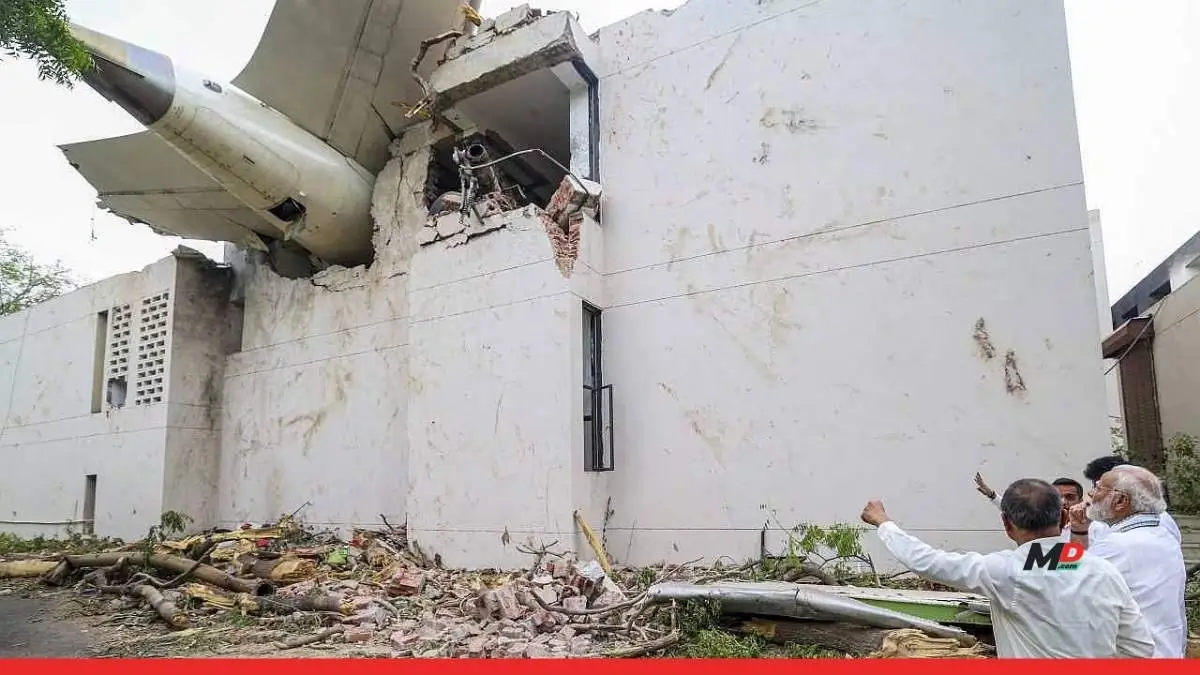
When the Aircraft Accident Investigation Bureau (AAIB) released its preliminary findings into the tragic crash of Air India flight AI 171, many expected clarity. Instead, the report, running just 15 pages, has done little to calm nerves. If anything, it has deepened concerns – raising more questions than it answers.
At the heart of the report is the assertion that both engine fuel control switches transitioned from ‘RUN’ to ‘CUTOFF’ within a second of each other moments after take-off, effectively starving the engines of fuel. A chilling exchange between the pilots is noted: one asked the other why he cut off the fuel, and the other replied that he didn’t. But the report stops there, leaving critical blanks unfilled.
Experts are quick to dismiss the possibility of accidental switch-off. These switches are spring-loaded, protected by brackets, and equipped with stop locks requiring deliberate lifting and mechanical movement to toggle. As one senior Boeing 787 pilot noted, “No sane pilot would move these switches during flight, especially at such a low altitude. Accidental movement is practically impossible.”
Speaking to media, Aviation safety expert Amit Singh calls the report “technically opaque,” especially as it omits detailed data traces, full cockpit transcripts, or recommendations for immediate inspections. This stands in stark contrast to preliminary reports such as the Ethiopian Airlines ET 302 (737 MAX) crash, which ran 33 pages and included exhaustive data enabling swift global action.
The Indian Commercial Pilots’ Association called the public speculation “reckless and unfounded,” especially insinuations of pilot suicide, emphasising there is no basis for such claims. The Airline Pilots’ Association of India (ALPA-I) was even more forthright, condemning the apparent bias towards pilot error and demanding inclusion in the investigation as observers to ensure fairness.
Meanwhile, experts caution against ignoring alternate explanations. Could the switches have malfunctioned mechanically? Could vibrations during take-off or an uncommanded system input have caused disengagement? A 2018 FAA Special Airworthiness Information Bulletin warned of potential disengagement of the fuel control switch locking feature in Boeing aircraft. While advisory in nature, it flagged exactly such failure modes. Yet, Air India never carried out inspections. In 2019 and 2023, the throttle control module housing the switches was replaced, but for unrelated reasons.
Critically, the AAIB report mentions this advisory but does not address why no inspection was carried out, nor does it recommend immediate fleet-wide checks. Experts deem this a glaring lapse in safety oversight. “A corrective action then may have prevented this crash,” Singh said.
Equally puzzling is the timeline. Data shows the aircraft lifted off at 1:38:39 pm, attaining a maximum speed of 180 knots three seconds later. The Ram Air Turbine (RAT), which deploys after both engines lose power, was activated during initial climb. This suggests engine shutdown occurred almost immediately after lift-off. Yet, the switches were moved to cut-off slightly later. If so, what exactly caused the engines to stop? Were the switches moved in response to an existing failure? Or did the system register the switches as cut-off without physical movement?
These unanswered questions strike at the heart of aviation safety. While the preliminary report points to the switches transitioning, it does not establish how, why, or by whom – or even whether mechanical failure played a role. There is no recommendation issued to Boeing or GE on engine inspections, nor to operators worldwide to verify fuel switch lock integrity.
Perhaps most damning is the absence of transparency. Compared to the ET 302 preliminary report, the AI 171 report reads more like a narrative than a forensic technical analysis. This is troubling for an accident that claimed 260 lives and has global implications given the aircraft type.
The Ministry of Civil Aviation too has urged caution. Union Civil Aviation Minister K Ram Mohan Naidu warned against premature conclusions, while Minister of State Murlidhar Mohol called the findings “truly shocking,” emphasising that the real investigation begins now.
Indeed, it does. Because the fundamental question remains: did human error cause the switches to move, or was there an underlying mechanical or systemic failure? Without cockpit voice recorder transcripts, detailed switch movement logs, and rigorous component analysis, these questions will remain unanswered.
Aviation is an industry built on lessons learnt from tragedy. Each accident shapes future safety. The purpose of an investigation is not blame, but prevention. For that, transparency, data, and swift systemic correction are non-negotiable. In the case of AI 171, the preliminary report is just that – preliminary. But unless the final report decisively answers how and why two engines were cut off seconds after lift-off, it will remain a report that raises more questions than it resolves.