

Technology
Zoom wants to turn workplace conversations into completed work


A meeting ends. The decisions are made, responsibilities assigned, and deadlines agreed upon. Then comes the familiar scramble: someone needs to find the relevant document, another person searches through chat threads, and a third tries to remember exactly what the client said.
For all the promise of workplace AI, much of the work that follows a conversation still depends on people stitching together the pieces. Zoom wants to change that.
At its annual Zoomtopia conference, the company unveiled a Unified Context Layer, designed to connect conversations across meetings, phone calls, chats, documents, and third-party applications. The objective is to give employees and AI agents a shared understanding of what has happened, what has been decided, and what needs to happen next.
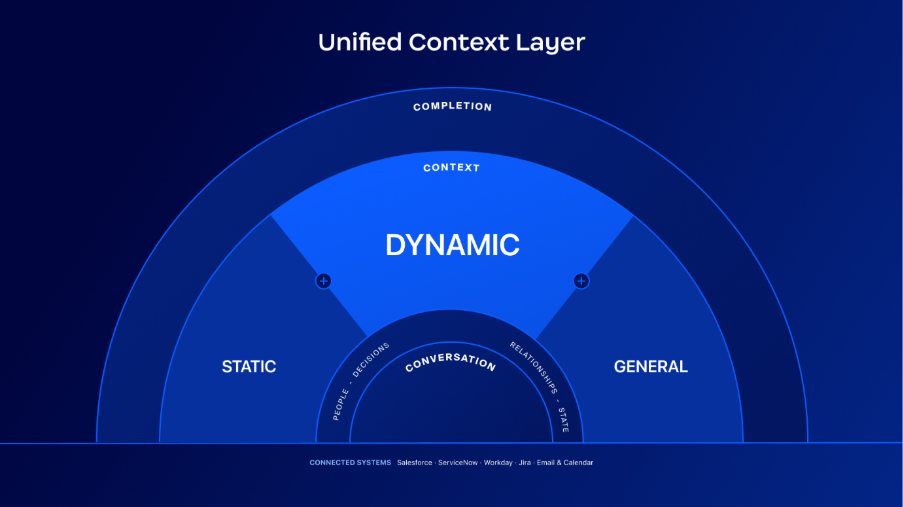
The announcement signals a larger shift in Zoom’s ambitions. The company wants to move beyond helping people communicate towards helping them execute.
“AI models are only as powerful as their understanding of your business, and that context makes all the difference,” said Eric Yuan, founder and CEO of Zoom. “Fragmented product experiences isolate conversations, stall decisions, and drag businesses down. Today, with the Unified Context Layer, we’re laying the groundwork for a system of action designed to turn conversations into completed work.”
The real productivity problem is what happens after the meeting
Businesses have spent years digitising communication and, more recently, adding AI to individual applications. Yet information remains scattered across platforms, often forcing employees to reconstruct the history behind a decision before they can act on it.
That creates a less visible productivity tax. A meeting summary may capture what was discussed, but someone still has to update the customer relationship management system, assign tasks, prepare a proposal, or brief colleagues who were absent.
Zoom’s approach is to connect conversational intelligence with business information and make that context available wherever work happens. Its new capabilities include AI-powered search across Zoom and more than 40 third-party applications, as well as workflows that can turn meeting summaries into follow-up actions in tools such as Salesforce.
Its ZoomMate AI Agent Teams can also coordinate specialised agents working on different parts of a project, combining their outputs into a deliverable for human review.
The underlying bet is straightforward: the value of AI will increasingly be measured by how much work it helps complete, rather than how quickly it generates an answer.
From communication platform to system of action
The strategy also reflects Zoom’s attempt to deepen its role inside enterprise technology stacks. Rather than keeping its capabilities confined to its own interface, the company is expanding access through APIs and Model Context Protocol (MCP) servers, allowing developers and AI agents to use Zoom’s capabilities in other environments.
That could make Zoom’s conversational data useful even when employees are working elsewhere. It also puts the company closer to the workflows where business decisions translate into operational outcomes.
The commercial momentum offers some support for this direction. Zoom says its Virtual Agent customer count has surged by 256%. Users of its AI tools report completing tasks twice as fast, while 72% cite high or extremely high business impact, compared with a market average of 63%, according to the company’s 2026 GenAI ROI Study of 500 US-based knowledge workers. Zoom expects to surpass $5 billion in annual revenue this year.
For customers, the potential extends beyond internal productivity. In customer experience, a connected context layer could help service teams carry customer history across channels, reducing the need for people to repeat themselves every time an interaction moves from an AI assistant to a human agent.
“Our teams have the information they need, but it’s often dispersed across meetings, notes, and different systems,” said Christine Sarros, senior vice president of Enterprise Engineering, Oracle Cloud Infrastructure. “Zoom’s new solutions could help bring that context together, so teams can enter customer conversations with a clearer understanding of what’s been discussed, what’s been decided, and what needs to happen next. We see an opportunity to spend less time reconstructing history and more time helping our customers move forward.”
The harder question is trust
Connecting more information to AI agents also raises the stakes around access, accuracy, and accountability. A system that can retrieve business context and initiate actions needs to respect permissions, protect sensitive information, and give organisations control over what its agents can access and do.
Zoom says configurable access controls and new AI management capabilities will help organisations govern how these tools operate. Their effectiveness will be central to whether businesses are comfortable moving from AI-generated recommendations to AI-assisted execution.
The opportunity is significant. If workplace AI can preserve the reasoning behind decisions and carry those decisions into the systems where work gets done, companies could spend less time managing information and more time using it.
The next productivity breakthrough may emerge from a simple change in how work flows: fewer handoffs, less reconstruction, and a shorter distance between saying something needs to happen and making it happen.