

Technology
Cyber resilience is becoming a boardroom imperative as AI reshapes the threat landscape


Cybersecurity has become a business leadership challenge that technology alone cannot solve. As artificial intelligence accelerates innovation and creates new avenues for attack, organisations face mounting pressure to rethink how they manage risk, build digital trust, and prepare for disruption. The question for leadership teams is increasingly whether their security models can keep pace with the businesses they are enabling.
A holistic perspective is needed

For Milind Shah, Managing Director, Randstad Digital – India, that means examining security architecture, external partnerships, and talent strategy together. With AI-enabled threats and regulatory requirements raising the bar, traditional approaches built around responding to alerts may no longer be sufficient. Hybrid security teams, he argues, can help organisations combine internal accountability with specialised external expertise, addressing capability gaps without slowing business priorities.
“Cybersecurity Awareness Month is a good reminder for leadership teams to look at how security is built and maintained inside their organizations. AI-enabled threats and regulations such as NIS2 and DORA are raising the standard for how consistently security teams must operate, and reactive models built around alert queues struggle to meet it. Hybrid security teams offer a practical answer. Strategic leadership stays in-house, where context and accountability sit, while specialized external pods handle complex, tactical execution. Enterprises gain access to the right expertise at the point of need, without waiting months to fill a vacancy.
The same thinking applies to choosing a security partner. The right partner works towards business outcomes: fewer bottlenecks, no unnecessary tool sprawl, and a foundation that lets teams innovate and scale with confidence. Good security should feel invisible to the people relying on it every day.
Enterprises also have a role in building the talent pipeline. Working with employers to create structured routes into cybersecurity produces specialists who can implement what boards have already prioritized. We encourage organisations to review their security model, their partners and their talent strategy together, because resilience depends on all three working as one.”
The evolving nature of the business landscape
The pressure is also changing the role of the chief information security officer. Security leaders must now translate technical vulnerabilities into business risks, navigate regulatory expectations, and advise boards on decisions that can affect growth and continuity. AI adds another layer of complexity by accelerating vulnerability discovery, introducing new AI agents that require protection, and increasing the volume of code that must be secured.

Ross McKerchar, CISO at Sophos, describes this as a triple bind for security teams. The combination of these pressures is intensifying demand for experienced security professionals, making leadership support, adequate resources, and shared accountability essential to resilience.
“The expectations put on CISOs and their teams are at an all-time high. Today’s security leaders are expected not only to manage threats, but also to communicate risk to boards, navigate regulatory requirements, and guide business decisions while maintaining an extremely secure environment.
AI is only adding more pressure to the equation, with security teams finding themselves in what we call a triple bind; where AI is accelerating vulnerability discovery, introducing a growing population of AI agents that need to be secured, and enabling more code to be written and reviewed than teams have historically been staffed to manage. Each of these trends increases workload on its own, but together they fundamentally reshape how security teams prioritize their work.
As those demands continue to grow, many organizations are finding themselves competing for a limited pool of senior security talent capable of managing both today’s security risks and tomorrow’s business challenges. The organizations that will be most resilient are those that treat cybersecurity as a shared business responsibility and ensure security leaders have the support, visibility, and resources they need to succeed.”
Digital trust becomes a growth strategy
The business implications extend well beyond protecting internal systems. As customers increasingly rely on digital channels for communication, payments, authentication, and transactions, the security of these interactions directly influences their confidence in a brand.

Tushar Agnihotri, Chief Executive Officer, Route Mobile, points to research highlighting the scale of the challenge: 59% of Indian consumers surveyed reported having been targeted by digital fraud. For businesses, this makes the infrastructure underpinning customer interactions a strategic consideration. Security must be built into communications, identity verification, and authentication, while preserving the convenience customers expect.
“As India’s digital economy continues to grow, building digital trust is becoming central to how businesses engage with customers and drive meaningful growth. From messaging and calls to applications, payments and digital identities, every digital interaction presents an opportunity to strengthen customer confidence and deliver seamless experiences. With 59% of Indian consumers surveyed reporting that they had been targeted by digital fraud, the importance of building secure and trustworthy digital experiences has become increasingly evident.
For businesses, this means integrating security into the very foundation of their digital infrastructure. The systems through which enterprises communicate, authenticate and transact with customers play a critical role in enabling reliable digital experiences. Communications, identity verification and authentication are therefore becoming strategic components of the digital trust architecture.
The opportunity for the industry lies in making security an integral part of the customer experience, without introducing unnecessary friction. As digital adoption accelerates, customers will increasingly expect businesses to deliver convenience and confidence together. The next phase of digital growth will be shaped by the ability to combine innovation with trust, making cybersecurity a fundamental enabler of business growth and stronger customer relationships.”
Cybersecurity is no longer just an IT consideration

That trust also depends on how organisations govern data and manage their growing technology footprint. Sunil Sharma, Managing Director and VP – Sales (India & SAARC), Sophos, argues that cybersecurity must be embedded in business strategy as digital transformation deepens and regulatory developments, including India’s Digital Personal Data Protection Act, sharpen expectations around responsible data stewardship.
“India’s digital transformation is creating unprecedented opportunities for businesses of all sizes. From digital payments and AI-driven innovation to cloud adoption and connected ecosystems, organizations today are embracing technology to drive growth, improve customer experiences, and stay competitive. As this journey accelerates, cybersecurity is no longer just an IT consideration. It has become a critical business priority that underpins trust, resilience, and long-term success. The conversation around cybersecurity is also evolving at the leadership level. Regulatory developments such as the Digital Personal Data Protection Act have reinforced the importance of responsible data stewardship, while growing digital dependencies have made cyber resilience an essential component of business strategy.
This Cybersecurity Awareness Month, companies should view cybersecurity as a shared responsibility that extends across the organization. Building a culture of awareness, accountability, and preparedness is just as important as investing in technology. The organizations that embed security into their growth agenda today will be best positioned to earn stakeholder trust, adapt to change, and thrive in an increasingly digital economy.”
Resilience begins with everyday behaviour
Technology, governance, and specialist expertise form only part of the equation. Employees remain central to how security works in practice, particularly in data-intensive environments where information moves across teams, systems, and geographies. A suspicious email reported promptly, access permissions reviewed consistently, or security considered at the design stage can all help reduce exposure.
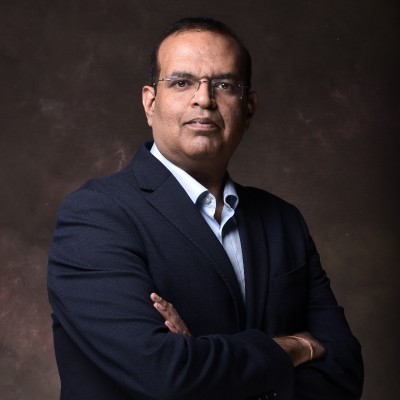
Dr. Sanjay Kukreja, Chief Technology Officer, eClerx, emphasises that resilience is built through these everyday decisions. As AI expands the possibilities for both innovation and misuse, organisations need to make security part of how people work, rather than treating it as a periodic awareness exercise.
“Cybersecurity Awareness month is a timely reminder that resilience is built by every person who touches the data, and that client trust is earned one secure interaction at a time.
In data-intensive operations like ours, where client processes span geographies and teams, the strength of our security posture is determined by daily habits: how quickly an employee reports a suspicious email, how consistently access is reviewed, and how early security is designed into a workflow rather than bolted on afterward.
At eClerx, cybersecurity is the foundation that allows us to innovate with confidence. In a world where AI accelerates both opportunity and risk, our responsibility is clear: protect client trust, embed security into every process and platform, and foster a culture in which every employee is a defender. Resilience is practiced every day and not achieved in one month.”
The expanding definition of everyday security
As organisations move more work into AI-enabled systems, the definition of everyday security must expand to include the non-human identities and autonomous agents operating within enterprise environments. These systems need appropriate access controls, clear permissions, and continuous oversight, just as employees do.

Vaibhav Tare, Chief Information Security Officer, Fulcrum Digital, argues that the fundamentals of cybersecurity remain critical even as the technology landscape changes. Unmonitored AI agents and reused credentials can expose organisations to risks that sophisticated perimeter defences alone may not prevent.
“This year’s Cybersecurity Awareness Month theme, Stay Safe Online, is often read as a consumer message, but enterprises can’t afford to treat it that way. As AI agents take on more of the day-to-day work inside organizations, from processing documents to executing transactions, every one of those agents needs the same basic hygiene we ask of employees: strong identity controls, least-privilege access and continuous monitoring of what they’re allowed to do. Attackers rarely need to break through a firewall if they can walk in through an unmonitored agent or a reused credential. The organizations that stay resilient won’t necessarily be the ones with the newest security tools, they’ll be the ones that got the fundamentals right for both their people and their AI systems. At Fulcrum Digital, we build that discipline into how we design AI systems from day one, because prevention is still far cheaper than recovery.”
The message for business leaders this Cybersecurity Awareness Month is clear: cyber resilience must grow alongside digital ambition. That requires more than security investments. It calls for accountable leadership, access to skilled talent, secure customer experiences, disciplined AI deployment, and a workforce equipped to recognise and report threats. As the attack surface expands, organisations that make security part of how they build, operate, and innovate will be better placed to protect stakeholder trust and sustain growth.