
Politics
India strikes long awaited, but unequal trade deal with USA


In a move that has stunned geopolitical observers and trade analysts alike, the United States and India announced a sweeping trade agreement late Monday that fundamentally alters the economic relationship between the two largest democracies.
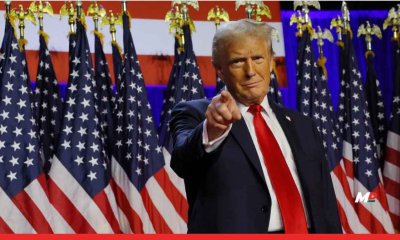
The deal, heralded by US President Donald Trump as a victory for “fair trade,” sees the US reducing its reciprocal tariffs on Indian goods from a punitive 25% (escalating to 50% in some sectors) down to 18%. In exchange, however, India appears to have conceded on virtually every major American demand: eliminating tariffs on US imports, committing to purchase over $500 billion in US energy and goods, and perhaps most significantly, agreeing to halt all purchases of Russian crude oil.
For the Narendra Modi administration, the deal is being presented as a tactical victory that averted a catastrophic trade war. Just days prior, Indian exporters were staring down the barrel of a 50% tariff regime that threatened to decimate the textiles, gems, and pharmaceuticals sectors. By securing an 18% rate, New Delhi has managed to keep Indian goods competitive against regional rivals like Vietnam (20%) and Pakistan (19%). Yet, on the face of it, the agreement looks less like a compromise and more like a capitulation, with India trading its strategic autonomy and domestic market protection for mere survival in the American marketplace.
The “Zero Tariff” Shock
The most glaring asymmetry in the deal lies in the tariff structures. While Indian exporters will still face an 18% levy to enter the US market (a significant barrier in and of itself), India has reportedly agreed to slash tariffs and non-tariff barriers on US goods to zero. This “zero-for-eighteen” arrangement has sparked immediate concern among Indian leaders.
For decades, India has utilized high tariffs to shield its developing domestic industries, from agriculture to automobile manufacturing, under the “Make in India” initiative. Opening the floodgates to duty-free American imports could undermine these efforts. US agricultural products, often heavily subsidized and produced at massive scale, could flood the Indian market, threatening the livelihoods of millions of farmers. Similarly, American technology and manufactured goods entering duty-free could stifle the growth of nascent Indian competitors.
President Trump took to Truth Social to celebrate this concession, stating, “They will likewise move forward to reduce their Tariffs and Non Tariff Barriers against the United States, to ZERO.” If fully implemented, this dismantling of India’s tariff wall represents a historic reversal of the country’s protectionist trade policy, effectively granting the US preferential access that even free trade partners do not enjoy, all without securing duty-free access for Indian goods in return.
The Russian Oil Pivot: End of Strategic Autonomy?
Beyond the economics, the geopolitical ramifications are profound. The deal includes an explicit commitment from India to stop buying Russian oil, a trade channel that has been a crucial economic lifeline for New Delhi since the outbreak of the Ukraine war. By purchasing discounted Russian crude, India had managed to keep domestic fuel prices stable and control inflation despite global volatility.
Abandoning the autonomy of being able to trade with all partners based on national interest signals a forced realignment. Trump’s assertion that India will now “buy much more from the United States and, potentially, Venezuela” indicates that Washington has successfully weaponized its market access to dictate India’s foreign policy. The removal of the additional 25% “punitive” tariff, which was specifically linked to the Russian oil trade, serves as the carrot for this geopolitical stick. India is effectively paying a premium for US energy to avoid being shut out of the US consumer market.
The $500 Billion Commitment
The scale of the financial commitment is equally staggering. The pledge to purchase over $500 billion worth of US products essentially guarantees a massive reduction in the US trade deficit with India. For the US, this is a direct transfer of wealth and a boost to its domestic industries. For India, it represents a massive outflow of foreign exchange reserves and a forced diversion of supply chains away from cost-effective sources to more expensive American ones.
Industry Reactions
Viewing it as a positive landmark was Prashant Mathur, CEO of Saatvik Green Energy, who stated, “The U.S. decision to reduce tariffs on Indian goods from 25% to 18%, along with the elimination of the additional punitive levy, represents a strategic turning point for the solar sector, rather than just a routine policy change.”
He noted that “India’s solar exports, which include solar cells and solar modules, have already reached billions of dollars, making the United States our most important foreign market.” The seven-percentage-point reduction in tariffs significantly enhances the cost-competitiveness of Indian-made solar cells and modules. This improvement will make projects more profitable for U.S. developers and create a substantial new demand for high-efficiency, Made-in-India products in the coming years.
“This change also strengthens the case for supply chains that are open and reliable. It alleviates long-standing concerns about Chinese producers circumventing tariffs and positions India as a credible and dependable alternative manufacturing base that aligns with U.S. trade and industrial objectives. For companies like Saatvik, this transforms the U.S. market from being high-risk to one full of opportunities, emphasizing the need to accelerate investments, upgrade technology, and establish long-term, bankable partnerships with American utilities and developers.”
The Section 232 Fine Print
Trade experts warn that the “18% victory” may be even hollower than it appears due to the persistence of Section 232 tariffs. These duties, imposed on grounds of national security, primarily target steel and aluminum, which are key Indian exports. Reports suggest that the new 18% reciprocal tariff may not subsume the Section 232 levies, meaning that for sectors like metallurgy, the effective tax rate could remain prohibitively high.
Furthermore, the 18% rate is still a historic high for Indian goods entering the US, which previously enjoyed duty-free access under the Generalized System of Preferences (GSP) or low MFN rates. Accepting an 18% baseline as the “new normal” permanently erodes the price competitiveness of Indian exports. While it is better than the threatened 50%, it is a far cry from free trade.
A Blinking Contest
Ultimately, the narrative of the deal is one of coercion. The Trump administration leveraged the threat of devastating 50% tariffs to force India to the table. Facing the potential collapse of key export sectors and a rupee already under pressure, New Delhi “blinked.”
The government’s narrative focuses on the relative advantage: India is now better positioned than China (facing 30-35% effective rates) and marginally better than some Southeast Asian competitors. However, the cost of this relative safety is absolute vulnerability. By dismantling its tariff barriers and surrendering its independent energy policy, India has locked itself into an unequal partnership where the US sets the terms, the prices, and the policies.
As the details of the agreement are operationalized, the focus will shift to the domestic impact in India. Will the influx of zero-tariff American goods spark a backlash from Indian farmers and industrialists? Will the shift away from Russian oil drive up inflation? And most importantly, has the “Make in India” lion been tamed by the American eagle? The deal may be signed, but the true cost of this “friendship” is only just beginning to be calculated.