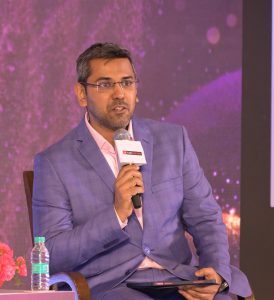
The world of Indian advertising fell silent with the passing of Piyush Pandey, a man who did not merely write commercials but authored the emotional language of modern India.
The veteran adman, a recipient of the Padma Shri, passed away at the age of seventy, leaving behind a four-decade-long legacy woven into the fabric of the nation’s collective memory. For countless Indians, he was not just the Executive Chairman of Ogilvy India; he was the master storyteller who taught brands to speak from the heart, with the unmistakable rhythm and earthiness of the street.
Born in Jaipur, Pandey’s sensibility was rooted in the heartland, a grounding he carried with him when he joined the advertising industry in 1982 after early stints as a cricketer and a tea taster.
He entered a profession that largely spoke in an anglicised, elite dialect, but Pandey fundamentally rewrote its grammar. His guiding philosophy was elegantly simple: connect with the common man, use the vernacular, and inject every message with authentic, relatable humor and emotion.
He often advised young creatives that the audience would not ask, “How did they do it?” but simply say, “I love it.” This profound insight of emotion outselling polish was the secret sauce for every enduring campaign he created.
His work for Cadbury Dairy Milk is perhaps the most joyous marker of this creative shift. In the early 1990s, the brand was perceived as a treat strictly for children. Pandey’s team transformed this narrative with the iconic “Kuch Khaas Hai” (There’s something special) campaign.
Cadbury Dairy Milk and Cricket are back (embed this video)
Featuring a young woman dancing spontaneously onto a cricket pitch to celebrate a winning shot, the advertisement repositioned Cadbury not as a product, but as a symbol of uninhibited joy and a celebratory treat for all ages. It was an image of the newly liberalised India; confident, joyful, and finding a moment to dance with abandon, which immediately resonated and helped the brand reclaim its market leadership.
No discussion of his genius is complete without the campaigns for Fevicol. Turning an industrial adhesive into a beloved cultural icon, Pandey’s ads for Fevicol used outlandish humor and simple, culturally resonant situations to underline the product’s core promise of unbreakable strength.
Whether it was the overloaded bus that stayed intact on a bumpy road or the witty scenarios that birthed the immortal phrase, “Fevicol ka jod hai, tootega nahin,” these ads were slices of Indian life, turning a mundane product into a metaphor for enduring bonds.
This same emotional depth informed his work for Asian Paints, where “Har Ghar Kuch Kehta Hai” (Every house a tale to tell) transitioned paint from a simple commodity to a deeply personal narrator of memories and family life.
Pandey’s influence extended far beyond commercial brand building. He co-wrote the lyrics for the 1988 national integration anthem “Mile Sur Mera Tumhara,” a song that remains an indelible symbol of India’s unity in diversity.
Crucially, he lent his considerable communication prowess to social causes, most notably crafting the enduring slogan “Do Boond Zindagi Ki” for the Pulse Polio campaign, which played a pivotal role in eradicating the disease from the country.
Even in the political sphere, his knack for capturing the national mood was evident in the 2014 election campaign slogan “Ab ki Baar, Modi Sarkar,” a phrase that became a national rallying cry.
As the face of Ogilvy India, he steered the agency to become one of the most awarded creative offices globally, a testament to his commitment to authentic, world-class Indian creativity. His global recognition, including the Lion of St. Mark at the Cannes Lions alongside his brother Prasoon Pandey, only affirmed that the stories of India, told in their own tongue, had universal appeal.
Piyush Pandey’s passing marks the end of an era, yet his legacy endures in the countless campaigns that still make India smile, think, and feel. He was more than an ad-man; he was the chronicler of a nation’s rising confidence, a man who gave India an unmistakable, heartwarming voice, and a creative titan who leaves an inescapable void in his wake.