
Business
Tesla’s profits fall 44% as Musk’s ambitions take a new shape

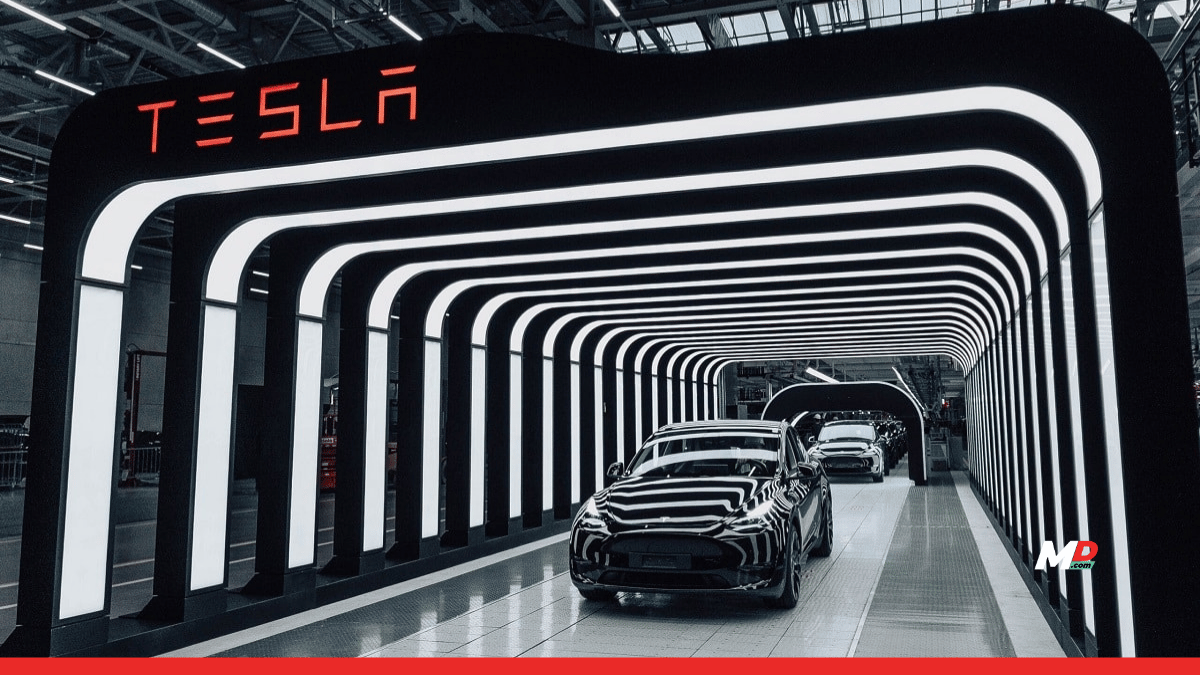
Tesla’s future is increasingly being measured in more than electric cars. As Elon Musk pushes deeper into artificial intelligence, robotics, and autonomous mobility, the company’s latest earnings reveal a business balancing weaker profits against an expensive technological transformation. Meanwhile, the prospect of a merger with SpaceX could redraw the boundaries of Musk’s corporate empire.
The electric vehicle maker reported third-quarter net income of $787 million, or 22 cents per share, a 44% decline from the year-earlier period. Revenue slipped marginally to $28 billion, falling short of analysts’ expectations. Adjusted earnings, however, came in at 48 cents per share, three cents above forecasts.
The numbers present a mixed picture for investors. Tesla continues to generate substantial business, but sustaining profitability while financing its ambitions remains a central challenge.
Cash flow offers a reprieve
One of the quarter’s more encouraging developments was Tesla’s $1.5 billion in free cash flow, which measures the cash left after capital investments. Analysts had anticipated a cash outflow as the company increased spending on AI infrastructure and other long-term projects.
Morningstar analyst Seth Goldstein attributed the improvement to a more capital-efficient approach, with Tesla delaying some longer-term projects to help fund its AI expansion internally.
Capital expenditure nevertheless doubled year-on-year to $4.7 billion. Tesla also lowered its full-year 2026 capital expenditure forecast from $25 billion to $20 billion, signalling a more measured spending trajectory than previously anticipated.
Profitability in its automotive business offered another positive signal. Tesla’s automotive gross margin rose to 18.1%, despite the discounts used to support demand. The company had sold nearly 490,000 vehicles in the quarter, extending a recovery after a prolonged period of sales weakness. In North America, 75% of vehicles sold included subscriptions to its Full Self-Driving (Supervised) driver-assistance system.
The challenge is to translate these indicators into durable growth while the company invests in technologies whose commercial returns may take years to materialise.
The SpaceX question
The bigger strategic question may lie beyond Tesla’s quarterly performance. Musk has confirmed that Tesla and SpaceX have established special committees of independent directors to explore a possible merger, bringing together an electric vehicle manufacturer and a space, satellite communications, and AI business. He has cautioned that a deal is far from certain.
SpaceX reported third-quarter revenue of $14.6 billion, up 161% year-on-year, and a profit of $4.4 billion, reversing a loss in the corresponding period last year. Its AI business became its largest revenue contributor, while Starlink remained its biggest profit generator.
A combination could create a formidable technology group spanning transport, autonomous systems, satellite connectivity, AI computing, and space infrastructure. It could also help Musk align investments across businesses increasingly converging around AI and automation.
Yet the prospect raises difficult questions. Tesla and SpaceX operate in different markets, face distinct regulatory environments, and have different capital requirements. SpaceX’s government and defence relationships introduce further considerations, while Tesla shareholders would need confidence that any transaction serves their interests.
The governance question is particularly important because Musk leads both companies and holds significant stakes in each. Independent oversight will be essential in assessing the terms of any potential transaction.
A bigger bet on the future
Tesla is also pushing beyond its core automotive business. Its ambitions encompass autonomous vehicles, robotaxis, humanoid robots, and AI-enabled manufacturing. The company’s valuation and long-term investment case increasingly depend on whether these initiatives can become meaningful sources of revenue and profit.
Investors must assess a business whose established operations face competitive and margin pressures while its future growth depends on technologies still being developed or scaled.
For Tesla, the latest results offer some reassurance on cash generation and margins, but weaker net income and subdued revenue underline the challenges ahead. A potential SpaceX combination adds another layer of uncertainty, with the possibility of creating a technology powerhouse accompanied by substantial financial and governance risks.
Musk’s broader vision is becoming clearer. The commercial test is whether the businesses can turn that vision into sustainable returns for shareholders. Until a merger takes shape, Tesla’s own performance will remain the most immediate measure of its progress.