

Brand Speak
Anant National University: Pioneering Hybrid Workplace Readiness Through Design Thinking

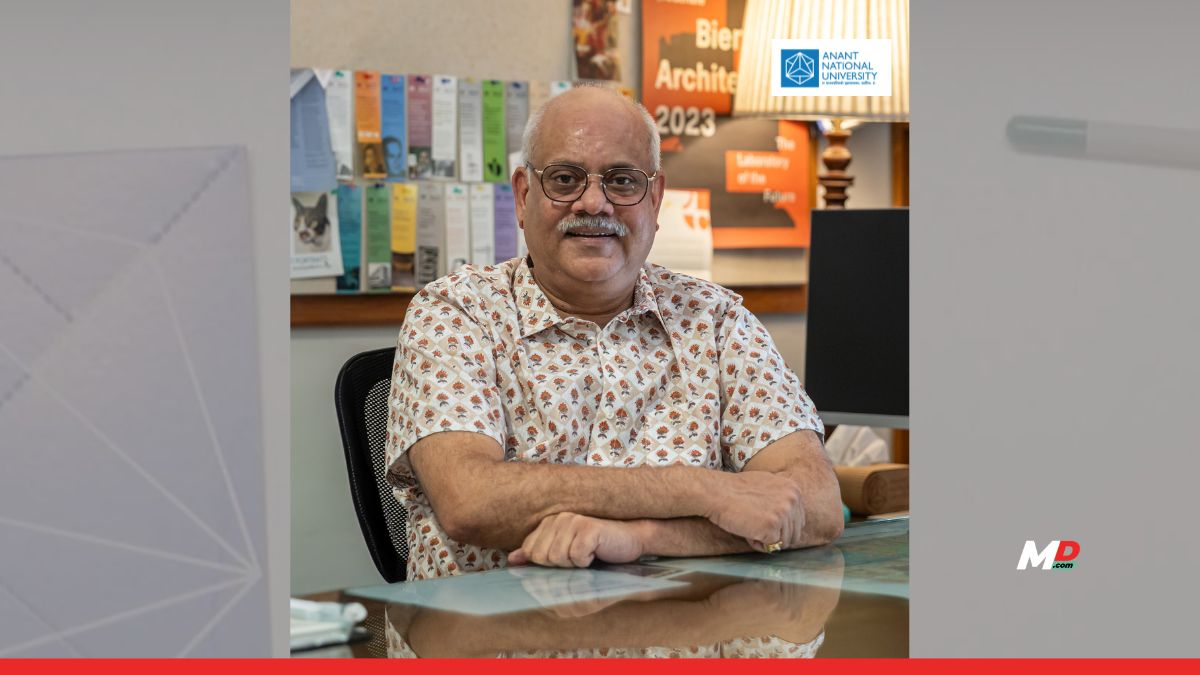
How is design thinking, combined with emerging tech disciplines, preparing students for hybrid, future-ready workplaces?
By Dr Sanjeev Vidyarthi
Provost, Anant National University
Workplaces are continually evolving along with the expectations placed on the workforce. Today’s workplaces are increasingly hybrid in nature, where physical and digital work converge, requiring professionals to be smarter than before: More agile, adaptive and flexible, with the ability to work across disciplines and navigate emerging technology responsibly and proficiently. Design thinking is at the heart of this enterprise. When combined meaningfully with cool technology, clever design thinking sets apart future-ready professionals trained at Anant National University.
Design thinking, often misunderstood as an arcane set of abstract ideas, is closer to what today’s generation calls the ‘mindset.’ It is a human-centred, iterative and adaptive way of visualising and solving problems by thoroughly understanding the context and then mindfully conceiving a clever solution. In today’s fast-paced world, where technological breakthroughs are constantly disrupting the workplace, design thinking remains central to the student’s skill set. They need to quickly learn how to think like a designer and then master the craft steadily via practice over time.
At Anant National University, we foreground this point in a variety of ways, for example, by centring design thinking in our pedagogy and by encouraging our students to design solutions that are not just innovative but socially and environmentally relevant. We promote emergent technologies like AI as powerful tools that students can harness thoughtfully to improve the quality of life for everyone via better design. This dual emphasis on technological competence and clever thinking is essential for preparing future-ready professionals who can successfully navigate hybrid workplaces.
The Hybrid Workplace: Complex, Agile, Human-Driven
The modern workplace has been fundamentally transformed by how teams need to collaborate across places and work across departments. Future workplaces will be even more dynamic, where humans and technology will engage more closely across geographies, cultures and disciplines. To successfully navigate this emergent work culture, future professionals must be more adaptive to change and be more tech-savvy while sharing basic design knowledge common among practitioners around the world. This is where design thinking plays a crucial role by equipping young professionals with the basic methodology practitioners use worldwide: Identify solvable problems, design feasible solutions, create experimental prototypes and then test and iterate in real time.
Anant emphasises collaborative and experiential learning through industry engagement, live projects and interdisciplinary assignments to help students learn to navigate the joys and surprises of the modern workplace. This approach induces better confidence in our students while preparing them to excel in their careers.
Breaking Silos for Holistic Learning
The workplaces of the future will certainly not operate in silos. Cross-functional collaborations will take precedence, and professionals will need to master this interdisciplinarity. Similarly, the so-called Industry 4.0 demands research and innovation-centric design education that is both nationally and globally relevant. This pedagogical approach will ensure that students graduate as future-ready professionals, ready to work in modern hybrid workplaces.
Recognising this need, Anant’s pedagogy takes an interdisciplinary approach with a multidisciplinary curriculum, giving students early exposure to diverse perspectives towards problem-solving. This approach builds the intellectual flexibility required to thrive in environments where the lines between disciplines are continuously blurred.
However, being job-ready is just one part of what we do at Anant. Designers must be job creators and not job seekers. Which is why Anant provides institutionalised incubation support and one-on-one mentorship to empower our students to develop new ventures, helping the country’s industries and communities alike.
Looking Ahead: Leading with Purpose
The convergence of design thinking and emerging technologies offers an extraordinary opportunity to shape workplaces that are not just more efficient but also more humane, inclusive and sustainable.
At Anant, we offer an educational environment that goes beyond simply teaching skills. We are committed to transforming our students into thoughtful, responsible professionals who will not only excel in their fields but also drive the future of work with intent and impact both abroad and at home in India.
