

Auto
Tesla Loses Its Sales Crown, and India Could Be Its Only Road Back to the Throne

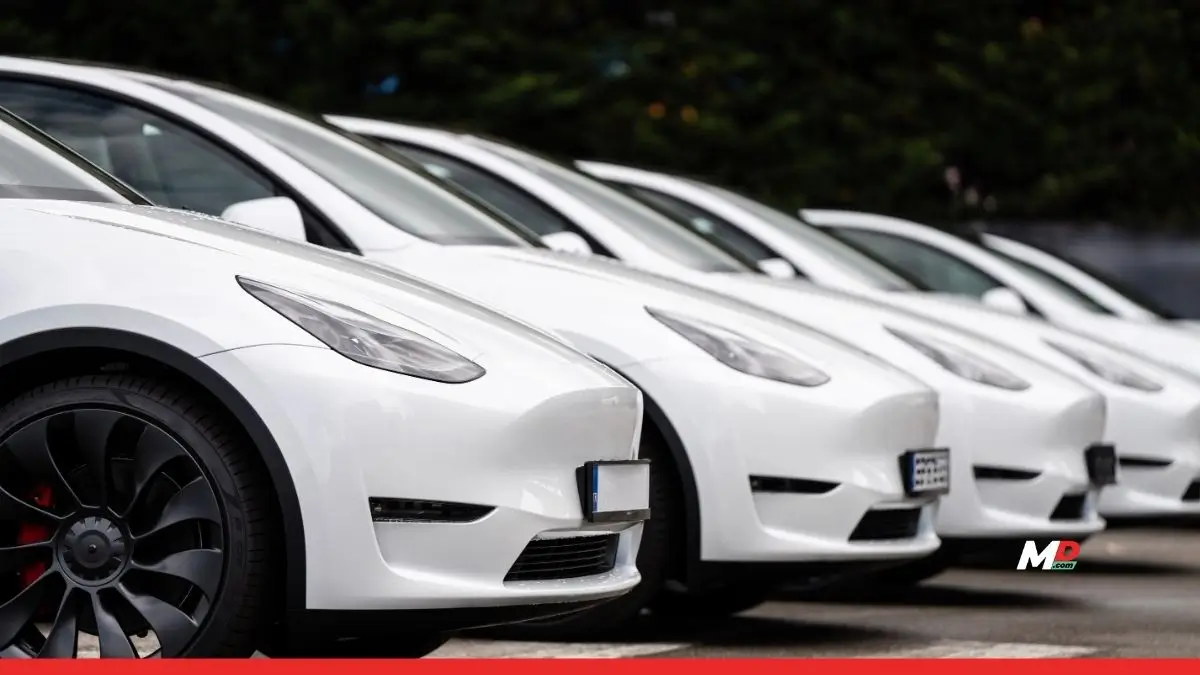
Tesla’s Q2 2025 financial results reveal a company grappling with a rapid and public fall from grace. The headline figures are stark: automotive revenues slumped 16% year-on-year, plummeting from $19.9billion to $16.7billion. Total revenues slid 12% to $22.5billion, while gross profit plunged 15% to $3.9billion. Adjusted EBITDA fell 7%, tracking a disastrous downward spiral. The root causes? A double hit from rapidly intensifying global competition and the fallout from Elon Musk’s increasingly controversial public persona and forays into politics.
Digging deeper, deliveries of Tesla’s mass-market Model 3/Y fell 12% to 373,728 units, while the much-hyped Cybertruck proved an outright flop, buried in the “other” category that fell 52% to a paltry 10,394 units—which also includes the legacy Model S and X. Tesla’s market expansion narrative has stalled, and the brand now risks ceding even more ground to a new breed of competitors.
Losing Top Dog Status in Europe
Once the undisputed king of electric vehicles in Europe, Tesla is now confronting a precipitous collapse. European sales have declined for five consecutive months in 2025, with unit sales plunging 27.9% year-on-year in May and market share dropping from 1.8% to just 1.2%. Across the first half of this year, Tesla’s deliveries in Europe dropped by 37%. Meanwhile, fully electric vehicle (EV) sales across the continent are surging—up 27% this spring and 34% over the first half of 2025—meaning Tesla is not just suffering, it’s being left behind as the market grows.
Multiple factors are driving this reversal. European consumers are flocking to more affordable EVs, many of them from China, and many are turned off by Musk’s high-profile political activism. Brand damage is evident, with protests erupting at Tesla dealerships and many longtime fans defecting.
BYD and the Chinese Onslaught
If any single competitor embodies Tesla’s fall, it’s Shenzhen-based BYD. In April 2025, BYD outsold Tesla in Europe for the first time ever, with European sales skyrocketing by 359% year-on-year while Tesla’s plummeted nearly 50%. BYD has achieved this feat despite the EU imposing stiff tariffs on Chinese BEVs—a 17% duty for BYD versus just under 8% for Tesla.
The Chinese assault is relentless. BYD now matches and sometimes exceeds Tesla’s European registrations, bolstered by affordable mass-market models like the Seagull (Dolphin Surf) priced from €23,000 ($26,000), undercutting Tesla’s offerings by a wide margin. Their grip on Europe is poised to tighten further with new factories in Hungary and Turkey, meaning their “price war” advantage is unlikely to fade soon.
Globally, BYD is projected to overtake Tesla in total BEV sales for 2025, securing a 15.7% share of the world market. BYD’s technological leap—claimed 400km of range in 5 minutes of charging, far outpacing Tesla’s Supercharger specs—combined with supply chain mastery and lower price points, is rewriting the rules of the global EV contest.
Meanwhile, Tesla’s rivals aren’t just in China. Volkswagen, BMW, Renault, Skoda, and Kia all posted double- or triple-digit EV sales growth in Europe this year, further highlighting Tesla’s stagnation.
India Might Offer a Chance at Salvation
With China now a saturated battlefield and Europe slipping away, India looms as Tesla’s last, best opportunity for a reset. The parallels to Apple’s India gamble are hard to ignore. In 2016, Apple’s iPhones had only a 2% share in India due to high tariffs and restrictions on direct retail. But through persistent localization—assembling in India, partnering with local suppliers, and tailoring distribution—Tim Cook has turned Apple into a $8billion juggernaut in the country, now with 8% market share and 20% of its global iPhones made domestically.
Tesla, in contrast, has fumbled its long-awaited India launch. The Mumbai showroom quietly opened with none of Musk’s showmanship, and new Model Y pricing—at nearly $70,000 post-tariffs—shut out all but the wealthiest Indians. The absence of localized manufacturing keeps import duties sky-high. For Tesla to thrive, it must embrace local production, courting the Modi administration for the same incentives that fueled Apple’s rise while navigating Donald Trump’s “America First” policy pressures from Washington.
Infrastructure, too, is a catch. With EV penetration still under 5% and luxury cars comprising just 1% of India’s market, Tesla faces an uphill climb. Charging infrastructure is scant, and the brand’s self-driving focus is a mismatch for a country where chauffeur-driven cars remain the aspirational norm.
Yet the long game—mirroring Apple’s nine-year journey—could pay off. If Tesla can learn from Apple’s playbook and tailor its product, supply chain, and brand engagement to Indian realities, it could seed a franchise to rival its lost dominance in the West.
Strategic Outlook
Tesla’s future growth prospects appear bleak in both China and Europe, as the company contends with intense competition from agile Chinese manufacturers like BYD and established European automakers who are rapidly expanding their EV offerings. These markets, once Tesla’s strongholds, now seem largely out of reach for rapid expansion given the shifts in consumer preferences and pricing pressures.
Consequently, India emerges as the company’s most promising avenue for sustainable growth, but success there will demand more than just market entry. Tesla must commit to localizing manufacturing, adapting its product lineup to Indian market realities, and engaging closely with government initiatives and incentives designed to promote domestic EV production.
Although the Indian EV market is nascent and comes with infrastructural challenges, Tesla can draw valuable lessons from Apple’s protracted yet ultimately successful strategy of persistent investment, localization, and market adaptation in India’s complex ecosystem. By following a similar blueprint—overcoming regulatory hurdles, supporting local supply chains, and tailoring its brand and pricing—Tesla may be able to reclaim its innovation leadership and revenue momentum.
In essence, India represents Tesla’s critical opportunity to rebuild its global position, but it requires a patient, strategic, and locally grounded approach rather than a quick fix. There’s no silver bullet that can make Musk’s problems go away in a jiffy.