
Leadership
Sarvam AI hires ex Google Cloud India MD Sreedharan as AI play gathers pace

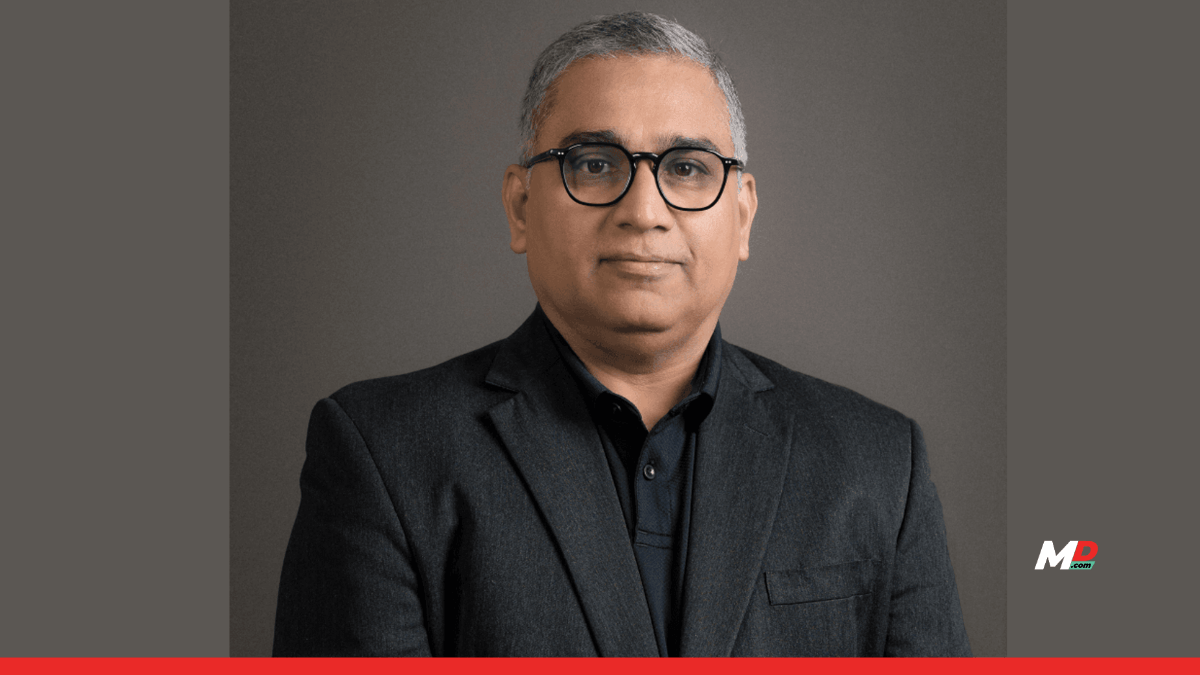
Sarvam AI has made a significant move from the laboratory to the boardroom, appointing former Google Cloud India managing director Sashikumar Sreedharan as its president and chief business officer. The appointment is the Bengaluru-based AI unicorn’s first high-profile C-suite hire, and comes at a point when the company is preparing to turn its technological ambitions into a much larger commercial business.
The timing is important. Sarvam recently raised $234 million in the first close of a $300 million Series B, giving it a post-money valuation of $1.5 billion. The funding is earmarked for frontier-model research, large-scale compute, and expanding its go-to-market efforts across enterprises, developers, and government.
At Google Cloud, he spent three years in India, having taken over as managing director in July 2025 after serving as chief operating officer for the company’s Asia-Pacific business. He had been closely involved in building Google Cloud’s enterprise and public-sector business in India, including the expansion of its sovereign cloud capabilities.
Sovereignty is central to Sarvam’s proposition. The company describes itself as a full-stack sovereign AI company, building infrastructure, models, and applications in India. Its pitch is increasingly aimed at organisations that want AI capabilities while retaining greater control over data, deployment, security, and costs. Its platform spans speech, translation, document intelligence, voice agents, and enterprise AI applications.
Sreedharan therefore brings something Sarvam increasingly needs: experience selling complex technology to large organisations. The company has already demonstrated that there is demand for Indian-language AI. Sarvam says its technologies have processed hundreds of millions of minutes of voice calls, while its latest speech-recognition model, Saaras V4, is designed for all 22 Indian languages. The company is also developing much larger models aimed at coding, cybersecurity, scientific research, and other demanding workloads.
The next challenge is considerably harder. Building good AI models is one thing. Convincing India’s largest companies and government institutions to deploy them at scale is another.
That is where the president and CBO role becomes important. Sreedharan is likely to help Sarvam deepen enterprise relationships, build partnerships, sharpen its commercial strategy, and translate its sovereign-AI proposition into repeatable, large-scale deployments.
There is also a broader strategic signal in the hire. Sarvam is no longer behaving like an early-stage AI research company that can afford to be defined primarily by its founders and engineers. With a $1.5 billion valuation, substantial fresh capital, and plans to build increasingly ambitious models, it needs a leadership bench capable of operating at enterprise scale.
The company is also looking beyond India for talent. It recently brought in AI researcher Devendra Chaplot, a founding member of Mistral AI and Thinking Machine Labs, as an adviser, and plans to establish a US office to attract Indian-origin AI researchers.
In that sense, Sreedharan’s appointment is less about filling a vacant executive chair and more about what Sarvam needs next. India has spent much of the AI conversation debating whether it can build its own foundational models and infrastructure. Sarvam has made that ambition central to its identity.
The harder question now is whether those technologies can become products and platforms that enterprises and governments actually adopt at population scale. Hiring a senior cloud executive with deep enterprise and public-sector experience suggests Sarvam is ready to tackle that question head-on.
The AI race is moving from who can build the model to who can build the business around it. Sarvam’s latest hire suggests it intends to compete on both fronts.