
Business
India’s Tech Leap: Building Global-Grade Display Tech Locally

For years, India’s manufacturing ambition has largely been measured in terms of capacity: how much we can produce, how quickly we can scale and how competitively we can manufacture.
Those questions still matter. But as global supply chains evolve, I believe a more important question is emerging: how much of the capability behind the finished product can we build here?
I have seen this distinction closely through more than 16 years in the LED display industry. A display may look simple when it is switched on, but its performance depends on thousands of components and a long chain of decisions, from PCB design and component selection to soldering, thermal management, mechanical engineering, module integration, ageing and testing. A small variation at one stage can eventually become a reliability issue in the field.
That is why I have come to believe that manufacturing capability cannot be separated from engineering capability.
For years, India’s LED display industry relied heavily on imported modules, with much of the downstream manufacturing taking place locally. At Xtreme Media, we had already built experience in designing and engineering display solutions for different applications. The next logical step was to take greater ownership of the manufacturing process itself.
That thinking led to the creation of LEDX Technology.
The objective was not simply to build another production facility. It was to create an engineering-led manufacturing ecosystem where product design, R&D, manufacturing and quality could work together, giving us greater control over consistency, performance and scale.
Our 10,000-square-metre facility in Vapi was built around that objective. Automated SMT lines bring precision and repeatability to electronics manufacturing, while Solder Paste Inspection and Automated Optical Inspection help identify variations at critical stages of PCB production. Controlled production environments and ESD-safe practices protect sensitive electronics. Modules undergo ageing before integration, while completed cabinets are tested continuously at high brightness for 72 hours before dispatch.
These are not isolated quality checks. Together, they reflect a larger manufacturing philosophy.
Quality is not something you inspect into a product at the end. It has to be built into the process.
For us, that begins well before production. It starts with product architecture, component selection and manufacturability, and continues through process control, production, inspection, ageing, testing and validation. In an LED display, this matters because quality ultimately shows up in very tangible ways: consistent brightness, colour performance, electrical reliability, thermal stability and the ability to perform over long operating cycles.
The objective is therefore not to keep adding checkpoints. It is to create greater visibility into the process and identify potential variations before they become larger problems.
This is where automation needs to be understood differently.
Automation is valuable not simply because a machine can perform a task faster. Its real value is the precision, repeatability and process data it brings to manufacturing. SPI can identify variations in solder paste application before components are placed. AOI can help identify placement and production issues. Production data can help teams understand where a process is moving away from its intended parameters.
But the machine does not replace the engineer.
A system can tell us that something has changed. An engineer still needs to understand why it changed and what should happen next.
The same thinking applies to product development. An LED display designed for a broadcast studio faces very different demands from one installed at an airport, in a retail environment or outdoors. Operating hours, temperature, dust, power conditions, thermal behaviour and maintenance requirements all influence engineering decisions.
A product that works well as a prototype must ultimately perform consistently in the real world. It must also be manufacturable at scale and practical to service over its lifecycle. That requires manufacturing to be part of the engineering conversation from the beginning, rather than becoming involved only after a design has been finalised.
This is the thinking behind our Co-Innovation approach at LEDX. We bring customer requirements, engineering, prototyping, testing, validation and manufacturing closer together. Instead of treating these as separate handovers, we see them as connected stages of the same process.
Understanding how a product will actually be used often leads to better engineering decisions. Feedback from customers, manufacturing teams and real-world applications can then inform the next iteration. In that sense, manufacturing is not simply where innovation ends. It is also where much of the learning begins.
I believe this depth of capability is becoming increasingly important for India.
The global manufacturing landscape is changing as companies diversify their supply chains and reduce dependence on individual production hubs. India has an opportunity to participate in that shift, but the opportunity is bigger than offering competitive manufacturing costs.
Global customers will increasingly look for quality consistency, engineering expertise, reliable processes, traceability and the ability to solve problems. Cost can help open a conversation. Capability is what builds a long-term relationship.
That requires moving beyond downstream manufacturing and building capability across the value chain: product engineering, R&D, advanced manufacturing, supplier ecosystems, testing and skilled technical talent.
It also requires patience. Engineering depth does not appear overnight. It is built through investment, experimentation, failures, improvements and the discipline to keep raising standards. A world-class manufacturing ecosystem is not created by machines alone. It needs engineers who understand products, manufacturing teams who understand processes, quality teams that can trace variation and organisations willing to invest for the long term.
For me, that is the real meaning of Made in India, for the world.
It is not simply about where a product is manufactured. It is about where it is engineered, where manufacturing challenges are solved, where quality is built into the process and where the knowledge to improve the product continues to grow.
LEDX is one step in that journey. Our ambition is not to suggest that one company can transform an industry. It is to demonstrate what becomes possible when engineering, manufacturing, quality and customer understanding are treated as parts of the same system.
If India continues developing this depth alongside manufacturing capacity, we can become more than a destination for downstream manufacturing. We can become a place where globally relevant technology is designed, engineered, manufactured and trusted.
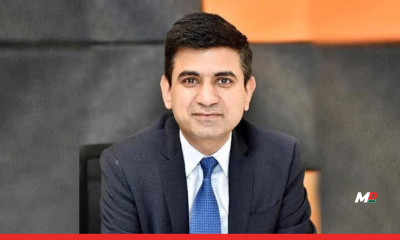
Sanket Rambhia is Managing Director of LEDX Technology & Xtreme Media