

Politics
Saudi Arabia and Israel seek common ground as Houthi allegedly attack Mecca

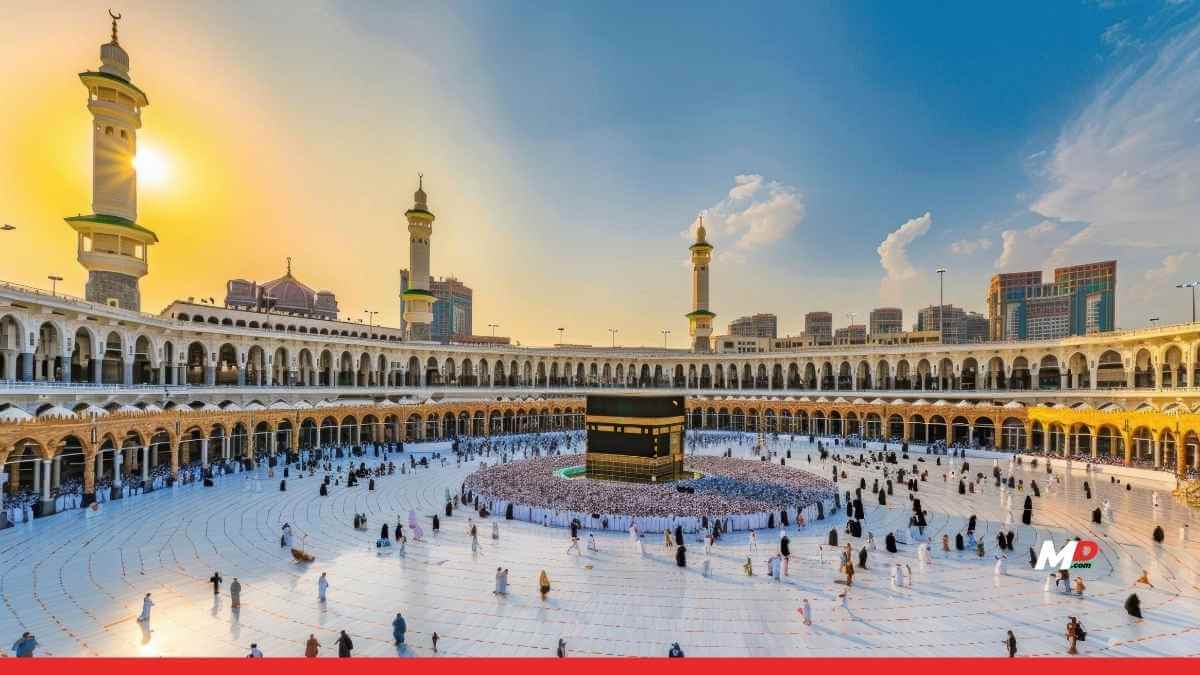
For years, Saudi Arabia and Israel had plenty of reasons to stay apart. The absence of formal diplomatic relations reflected the wider political sensitivities surrounding Israel and the Palestinian question. Yet the Middle East has a way of creating strategic conversations that politics alone cannot.
That is happening again, this time around Yemen. Saudi Arabia and Israel are reportedly discussing intelligence assistance to help Riyadh counter an intensifying Houthi threat, according to regional diplomats cited by The Jerusalem Post. The discussions are being mediated by US Central Command, and are understood to focus on intelligence rather than a broader normalisation of relations.
The logic is fairly straightforward. The Houthis, an Iran-aligned Yemeni movement, have developed an increasingly sophisticated arsenal of missiles, drones, and anti-ship weapons. Their attacks have previously threatened Saudi territory and Red Sea shipping, while the Bab el-Mandeb Strait remains strategically important for global trade and energy flows. For Riyadh, the problem has therefore moved well beyond Yemen.
A new security calculation
The reported Saudi-Israeli contact is significant precisely because intelligence is an area where cooperation can be more discreet than formal military coordination. Israel has extensive experience tracking missile and drone threats, including those launched from Yemen, while Saudi Arabia has a direct geographical exposure to the Houthis.
The two countries also share an immediate concern over the expansion of Iranian-aligned groups and the vulnerability of critical infrastructure and maritime routes.
That does not mean Riyadh and Jerusalem have suddenly resolved their much wider differences. The reported discussions are specifically about countering the Houthi threat, and there is no indication that they amount to a formal alliance or a comprehensive diplomatic breakthrough.
But the security conversation is becoming harder to ignore. And then came Mecca.
The Mecca red line
Saudi authorities said on Tuesday that air defences intercepted and destroyed a Houthi drone south of Mecca before it entered the holy city’s restricted airspace. Saudi-led coalition spokesman Turki al-Malki described the security of the kingdom’s two holy sites and pilgrims as a “red line”.
The incident carries an extraordinary symbolic weight. Mecca is Islam’s holiest city, and even the perception that it could become a target raises the political and religious stakes dramatically. Saudi authorities also issued security alerts covering Mecca, Jeddah, and Taif. Reuters reported that the incident was the second alleged Houthi attempt to target Mecca, following a ballistic-missile incident in 2017. The Organisation of Islamic Cooperation condemned what it described as an attack on the sanctity of holy sites.
But there is an important qualification. The Houthis deny that they targeted Mecca, while claiming they shot down an F-15 fighter jet, per the New York Times.
Two competing narratives
Houthi official Hazem al-Assad rejected the Saudi account, describing it as a “nauseating, worn-out lie” and denying that the group intended to strike the holy city. The statement echoes the broader information battle that has accompanied the conflict, with each side presenting sharply different accounts of military incidents.
The Houthi response also goes further than simply denying responsibility. By suggesting that the allegation is fabricated, the group is effectively challenging the Saudi version of events and raising the possibility, without providing independently verified evidence, that the incident could have been manufactured to justify escalation.
That claim remains unsubstantiated. What is independently clear is that a drone was intercepted south of Mecca, Saudi Arabia says it was Houthi-launched and intended for the restricted airspace, and the Houthis reject that account.
From Yemen to a wider regional equation
The larger story, however, is the way the Houthi conflict is reshaping regional calculations. Saudi Arabia spent years fighting the Houthis directly in Yemen before a fragile period of de-escalation. The latest attacks are reopening that security problem at a time when the kingdom is pursuing an ambitious economic transformation and trying to position itself as a stable hub for investment, tourism, logistics, and global business.
For Israel, meanwhile, the Houthis represent another long-range threat emanating from Iran’s regional network. That creates an unusual convergence. Riyadh and Jerusalem may still disagree profoundly on major political questions, but intelligence-sharing against a common security threat offers a narrow area of practical cooperation.
The irony is that the more the Houthi conflict spreads beyond Yemen’s borders, the more it is encouraging conversations between countries that have historically struggled to find common political ground.
For now, those conversations remain security-focused and largely behind the scenes. But in a region where intelligence can be as consequential as missiles, even a quiet conversation between Saudi Arabia and Israel can signal that the regional map is shifting.