
Leadership
Salesforce brings back Sayee Rajamany as Global Managing Director

There is a particular kind of homecoming that companies rarely get right. Someone leaves, builds a name for themselves elsewhere, and years later the door opens again, this time to a bigger room. Salesforce has just done exactly that with Sayee Rajamany, who has been appointed the company’s Global Managing Director.
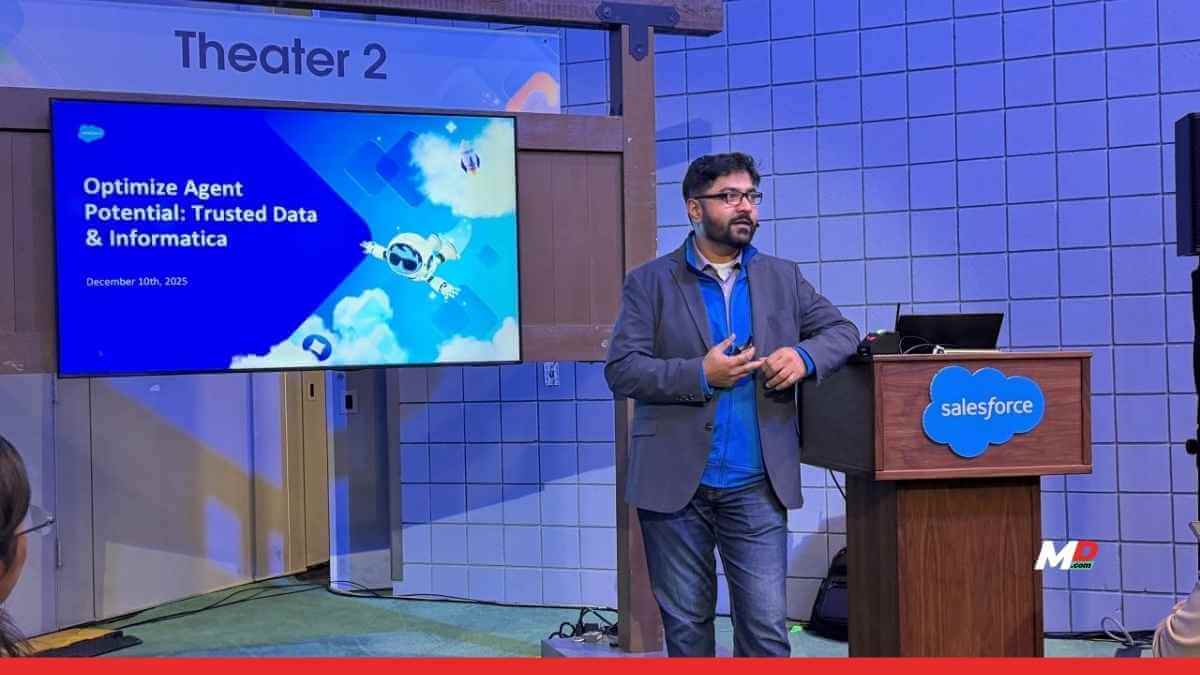
Rajamany is not a new face at Salesforce. He spent years inside the company before moving to KPMG US, where he rose to Managing Director and became one of its most visible voices on enterprise AI transformation. At industry stages like the Salesforce World Tour in New York, he made the case that the real bottleneck in AI adoption was never ambition, but data. Clean it, trust it, govern it properly, and the agents built on top of it actually work. Anything less, and even the smartest AI collapses under its own assumptions.
That single idea, that AI is only as good as the data foundation beneath it, appears to be one of many reasons why Salesforce wanted him back. The company has spent the last year pushing hard into agentic AI, most visibly through its acquisition of Informatica, a deal Rajamany himself spoke about from the KPMG side of the table, championing the importance of trusted data pipelines for enterprise-wide AI deployment. Bringing him in-house now reads less like a hire and more like a company recruiting its own external advocate, someone who has already spent months telling the world why this problem matters.
There is a wider signal here too. Rajamany’s career reads like a map of enterprise software’s last two decades, spanning stints across Salesforce itself, KPMG US, Amtex Systems, and Information Builders, each one adding a layer of understanding around data, consulting, and large-scale platform delivery. Over twenty years, he has sat on both the vendor side and the advisory side, which is a rarer vantage point than it sounds. He has seen how CRM promises look from inside the building and how they get tested, questioned, and sometimes quietly abandoned from outside it.
For Salesforce, the timing matters. As every major software vendor races to convince enterprises that AI agents are ready for serious, revenue-critical work, credibility is the scarcest resource in the room. A leader who has spent the last stretch of his career as an outside sceptic turned believer, one who publicly argued that trust has to be earned data point by data point, brings exactly that credibility back inside the tent. In an era where every company claims to be leading the AI charge, Salesforce seems to be betting that its strongest advocate was one of its own alumni all along.