

Auto
Tesla logs record deliveries even as global headwinds intensify

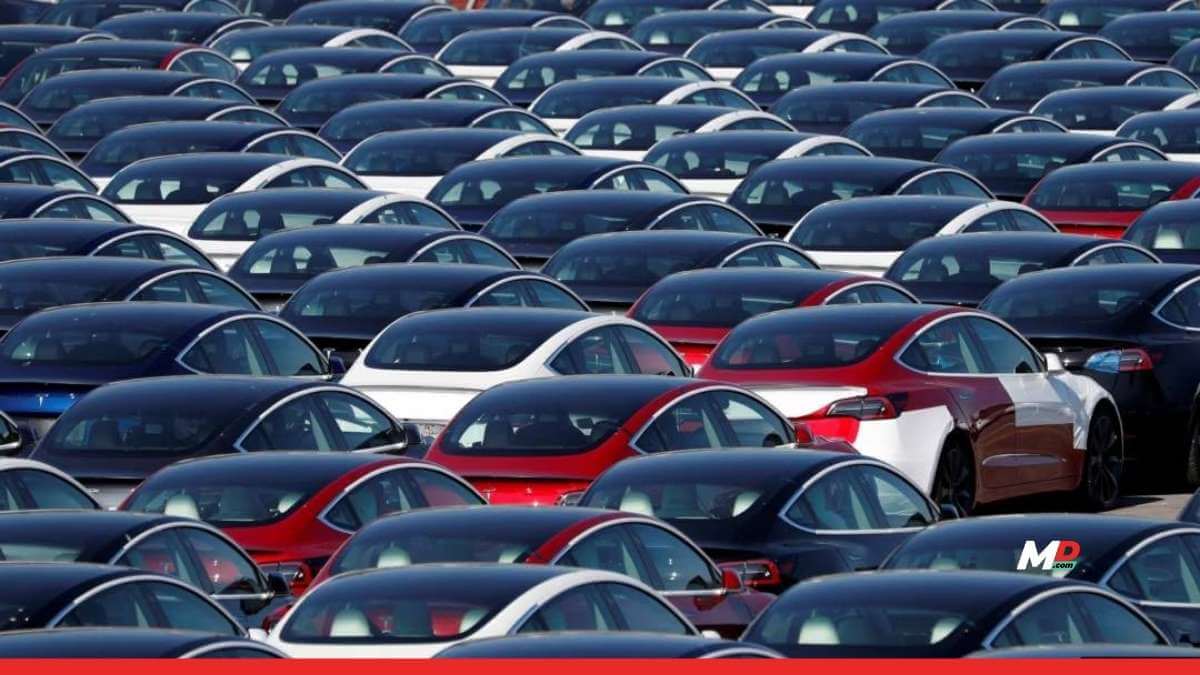
Tesla Inc. is currently navigating a deepening complexity in its global sales strategy, where record worldwide deliveries are being increasingly overshadowed by severe localized stagnation in crucial expansion markets.
Despite reporting strong third-quarter global delivery numbers, the electric vehicle giant is simultaneously battling sharp sales declines in Europe and facing an underwhelming market reception in India, underscoring the formidable challenge of transitioning from a premium niche brand to a true mass-market global contender.
The battle is particularly acute in Europe, the site of Tesla’s own Gigafactory Berlin. Official data from Germany’s Federal Motor Transport Authority (KBA) highlighted a significant setback: Tesla’s German registrations fell by 9.4% in September compared to the previous year.
This drop is jarring when juxtaposed against the overall German battery electric vehicle (BEV) market, which surged by 31.9% during the same month. This localized contraction suggests an erosion of competitive edge. Year-to-date, the picture is even starker, with Tesla’s German sales having plummeted over 50% compared to the prior year.
The vacuum created by Tesla’s struggles has been rapidly filled by aggressive rivals. German data shows that Chinese competitor BYD saw its sales volume surge more than twenty-fold in September, delivering 3,255 vehicles in the country and nearly matching Tesla’s monthly total.
Established European automakers are also leveraging local manufacturing and government incentives to push models that often align better with local consumer tastes and pricing expectations. For many European buyers, the core Model 3 and Model Y lineup, which has seen incremental updates rather than revolutionary changes, is struggling to justify its premium pricing against newer, subsidized models from both Asian and homegrown European brands. Tesla’s strategy of minimizing local adaptation and relying heavily on pricing adjustments appears to be reaching its limits in this diverse, competitive continent.
The European struggles are mirrored by an unexpectedly muted entry into the price-sensitive Indian market. After months of highly publicized engagement and negotiation, Tesla’s ground reality in the world’s most populous nation has proven harsh. Reports indicate the company has secured only approximately 600 orders, falling far short of the hype surrounding its arrival.
The primary hurdle remains the prohibitive cost structure. India’s steep import duties, often reaching 70% to 100% on fully built vehicles, inflate the price of an imported Model Y to a level three times higher than the country’s average EV sale price.
This forces Tesla to compete not in the mass-market segment, but in a tiny, high-end luxury bracket where it faces established rivals like Mercedes-Benz and BMW, who offer locally assembled models.
Furthermore, the challenges extend beyond price. Tesla’s sleek designs, built for pristine highways, feature low-ish ground clearance that is poorly suited to India’s variable road conditions. Coupled with a nascent charging network that is not even a fraction of what you might find in the West, and the ownership proposition becomes difficult to justify against cheaper, locally produced alternatives like the offerings from Tata Motors and Mahindra, which dominate the affordable EV space and offer vehicles specifically engineered for Indian infrastructure.
Tesla Chief Financial Officer, Vaibhav Taneja, once noted that high tariffs make India a “very hard market,” with most of the premium cost going to the local government, not the company’s bottom line.
Against this backdrop of dual-market pressure, the industry is intensely focused on the rumored upcoming affordable vehicle. Widely believed to be a simplified, lower-cost variant of the Model Y (sometimes internally codenamed “E41”), this model is expected to be about 20% cheaper to produce than its current counterpart.
A plant manager at Gigafactory Berlin recently tipped off that production of a “light version of the Model Y” would begin in the coming weeks, all but confirming the product’s imminent reveal. This pivot to affordability represents Tesla’s most pragmatic response to the global price war, aiming to reclaim lost market share in Europe and finally provide a product that can penetrate the cost-conscious entry-level segment in Asia.
The success of the low-cost model is crucial. For a company valued less on current revenue and more on future volume and technological promise, consistent growth is paramount. The struggles in Germany and the disappointment in India highlight a systemic weakness: Tesla lacks a true mass-market model capable of competing on value globally. Only the swift and successful deployment of a cheaper, higher-volume vehicle can provide the necessary succour and secure the company’s ambitious path forward against increasingly sophisticated and cost-effective rivals. The stakes have rarely been higher.