Travel
NMIA set to be inaugurated on Oct 8, but questions on accessibility remain

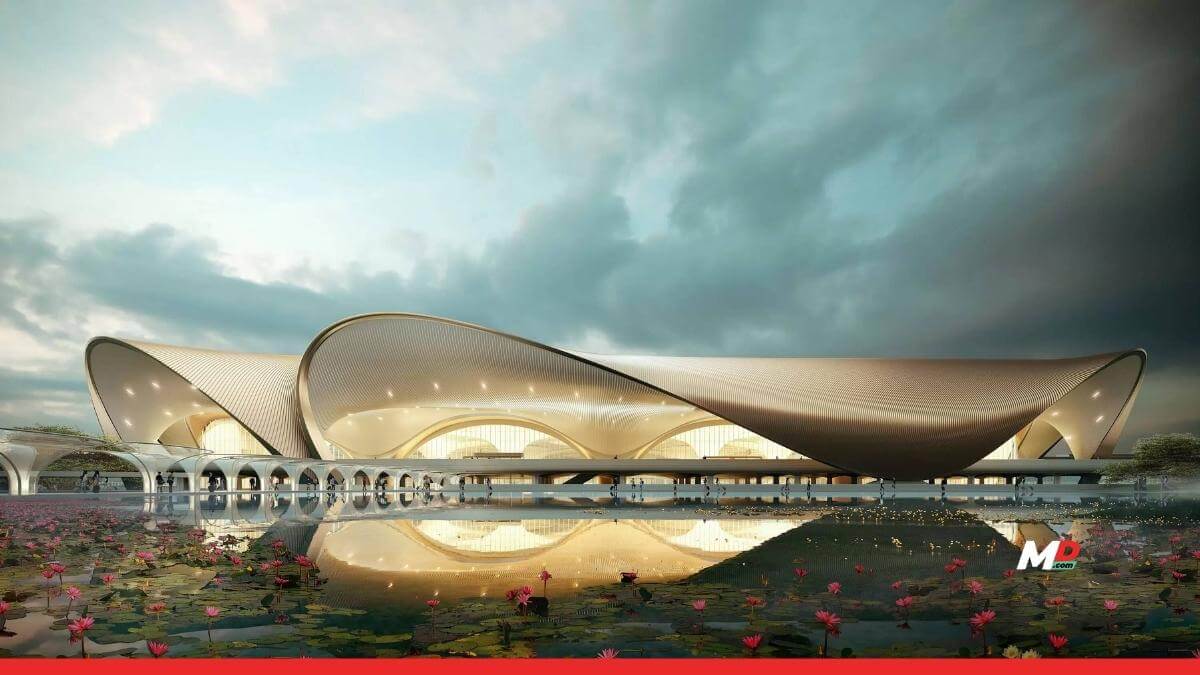
The long-awaited inauguration of the Navi Mumbai International Airport (NMIA), set to be formally inaugurated by Prime Minister Narendra Modi on October 8, marks a watershed moment for India’s global aviation ambitions. Designed to be a fully digital, state-of-the-art facility, NMIA is positioned to be India’s next major aviation hub, easing congestion at the capacity constrained Chhatrapati Shivaji Maharaj International Airport (CSMIA) and enabling the Mumbai Metropolitan Region to finally rival global transit centers like Dubai and Singapore. However, this vision for global connectivity faces an immediate and formidable challenge: last mile access and the reality of Mumbai’s perpetual traffic woes.
The strategic push behind NMIA is clear. Built at a cost of nearly ₹20,000 crore, the greenfield airport is engineered for scalability, with a final projected capacity of 90 million passengers annually. Its design incorporates cutting edge technology, including a fully connected, 5G enabled environment to allow for seamless, contact free processing via Digi Yatra.
Crucially, the government has moved to establish NMIA as a true international hub, enabling passengers flying from Tier-2 and Tier-3 cities across India to clear immigration at their first port of departure, a model that directly mirrors the efficiency of Gulf hubs. This is key to ensuring that Indian travelers use Indian carriers from an Indian gateway, rather than flying through foreign airports.
Despite this global ambition, NMIA’s success hinges on a single, yet unresolved, factor: time and cost efficiency of access. Currently, the surrounding infrastructure is incomplete, meaning passengers traveling from core areas of Mumbai and its northern suburbs face potentially time consuming and costly journeys.
While flagship projects like the Atal Setu sea bridge promise to connect South Mumbai in under 30 minutes, connectivity from the north and west remains subject to existing traffic bottlenecks on the Sion-Panvel Highway and other arterial roads.
Aviation experts warn that until multi modal transport links—including the planned Metro Line 3 extension and dedicated suburban rail links—are fully functional, the time and cost burden on passengers will be significant. The distance and the lack of reliable, quick mass transit create a practical barrier, which can easily take up to three hours to overcome from certain suburbs. Until this last mile challenge is overcome, analysts suggest few passengers will choose to risk tight connections by traveling between NMIA and CSMIA.
Furthermore, the very day of the inauguration is symptomatic of the ongoing issue. The Navi Mumbai Traffic Police have imposed extensive restrictions on vehicular movement and a ban on heavy vehicles from 6 am to 10 pm on October 8 to ensure smooth passage for the Prime Minister’s convoy and VVIP movement.
This temporary gridlock, while necessary for security, serves as a stark reminder of the persistent traffic challenges that will greet the hundreds of thousands of daily commuters and residents who will use the area once commercial operations begin in December.
NMIA is an aiport, but it plays a key role beyond that as an economic growth multiplier. If its potential is fully realized, it will attract Aerocity developments, healthcare facilities, and commercial parks. However, for this vision to truly materialize, the infrastructure must align with the ambition, ensuring NMIA is accessible and cost effective for the average traveler, thereby allowing Mumbai to finally take its place among the world’s elite multi airport cities.