
Business
BYD and Stellantis’ Leapmotor Reassess India Ambitions as Relations Thaw

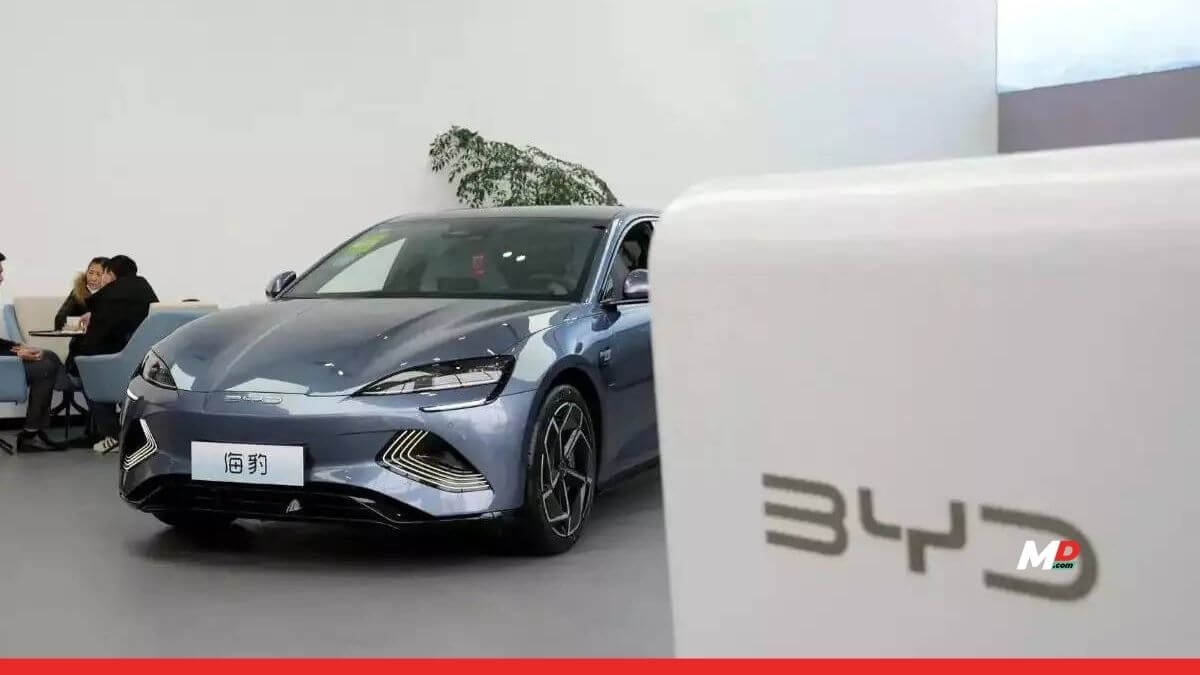
As diplomatic frost between India and China begins to thaw, Chinese automaker BYD Co. and Stellantis’ Chinese-backed Leapmotor brand are positioning themselves for a significant push into India’s burgeoning electric vehicle (EV) market. Both companies see the diplomatic reset not just as a political development, but as a critical business opportunity to expand in a market with growing appetite for clean mobility solutions.
Also read: Piyush Goyal Rejects BYD’s India Entry Amid Security Concerns
For BYD, the shift comes after years of cautious, remote operations in India. The Shenzhen-based EV giant, already the world’s largest electric vehicle manufacturer, is now moving to actively rekindle its presence in India. Sources familiar with BYD’s plans say that Ketsu Zhang, BYD’s India Managing Director, is set to visit India in the coming months. The visit will mark the first time in years that a senior executive is on Indian soil, after bilateral travel restrictions had kept them away.
BYD’s ambitions are clear: it plans to reestablish hands-on control over its operations, assess the condition of its local factory, and potentially expand its footprint. More strategically, BYD is preparing to launch its Atto 2 compact SUV in India, aiming to undercut the 20-lak-rupee mark despite high import levies. This move signals BYD’s intent to compete head-on with established local players like Tata Motors and Mahindra & Mahindra, both of which have started scaling up their EV lineups.
This development follows the gradual diplomatic thaw initiated by the meeting between Chinese President Xi Jinping and Indian Prime Minister Narendra Modi. With direct flights resuming after five years and business visas for Chinese travelers reinstated, BYD sees a window to pivot from constrained operations to proactive expansion.
The stakes for BYD are high. India’s EV market is still in early stages compared to China or Europe, but government incentives, increasing consumer awareness, and global supply chain shifts make it a critical battleground. BYD’s plans include exploring battery pack assembly partnerships, potentially with the Adani Group, as both countries navigate strategic dependencies in technology and minerals.
While BYD is focusing on expanding its presence gradually, Stellantis is opting for a more defined strategy. The European automotive giant, which recently unveiled its Leapmotor brand for global markets, is targeting India as its next frontier after Europe and Southeast Asia. Stellantis’ India CEO, Shailesh Hazela, confirmed that the first Leapmotor EV would arrive between April 2026 and March 2027, with plans to introduce a B-segment model and possibly a C-segment SUV.
The choice of models reflects an understanding of Indian market dynamics. SUVs dominate consumer preferences, especially in the premium segment, where poor road conditions and aspirational buying shape demand. Leapmotor’s B10 SUV, for instance, has specifications that suggest it is designed for both urban commutes and longer journeys, with battery capacities enabling ranges of up to 434 kilometers.
Interestingly, Stellantis does not intend to manufacture Leapmotor cars locally but will instead assemble them from CKD (completely knocked down) kits. This strategy suggests the company’s conservative approach—building a presence without making heavy upfront investments, while positioning Leapmotor as a premium offering in India. Unlike other low-cost markets where Leapmotor competes on affordability, in India, Stellantis appears focused on delivering higher-end products through its multi-brand showrooms, which already house Jeep and Citroen models.
This approach highlights a nuanced understanding of the Indian consumer. Rather than chase volume in a price-sensitive market, Stellantis seems to be focusing on carving a niche among premium EV buyers who seek quality and reliability. With plans to expand its dealership network from 110 to 150 outlets in the coming months and convert showrooms to EV-capable spaces, Stellantis is slowly laying the foundation for a longer-term play.
For both BYD and Stellantis, the recalibration comes amid a broader Indian government push to bolster EV adoption and establish India as a global manufacturing hub for clean vehicles. Recent policy measures and incentives aim to attract foreign automakers and supply chain partners. With these shifts, Beijing’s economic pragmatism appears to be aligning more closely with New Delhi’s ambitions.
This strategic window, however, is not without challenges. Despite the diplomatic thaw, geopolitical tensions linger beneath the surface. Indian regulators remain cautious, and public sentiment around Chinese companies can be volatile. BYD’s previous plan to establish a manufacturing base was rejected in 2023, illustrating the delicate balancing act it must now perform.
Nevertheless, both companies seem confident that the moment is right. BYD’s immediate focus is diagnostic—understanding market conditions and exploring battery assembly options—before making large-scale investment decisions. Stellantis’ more conservative market entry reflects its awareness of the need for strategic patience while testing waters.
As India pushes forward its vision of clean mobility and China seeks economic footholds abroad, BYD and Stellantis’ moves symbolize a larger realignment. This evolving relationship offers both automakers a chance to ride the wave of change, blending geopolitical pragmatism with commercial ambition.
Their success, however, will depend on navigating complex regulations, competitive dynamics, and consumer expectations. For now, their India ambitions remain tentative, but increasingly tangible.
Social Media Copy
China’s electric vehicle giants BYD and Stellantis’ Leapmotor are eyeing India as diplomatic relations between Beijing and New Delhi improve. After years of remote operations, BYD is sending senior executives, including Managing Director Ketsu Zhang, to India to evaluate market conditions and oversee the potential launch of its Atto 2 compact SUV early next year. The Atto 2 is set to challenge local players like Tata Motors and Mahindra & Mahindra by targeting a sub-2-million-rupee price point despite high import levies. Meanwhile, Stellantis is preparing to introduce the Leapmotor brand to India between April 2026 and March 2027. Its strategy focuses on a B-segment SUV model designed for premium buyers, reflecting India’s strong preference for SUVs. Rather than pursue local manufacturing, Stellantis plans to assemble cars from CKD kits, positioning Leapmotor as a quality offering in a price-sensitive market. These developments come as India and China gradually mend ties, opening doors for business visas, direct flights, and collaboration. As New Delhi pushes to become a hub for clean vehicle manufacturing, both BYD and Stellantis are cautiously optimistic about the opportunities. The big question remains: can these Chinese brands navigate regulatory hurdles and public sentiment to claim a foothold in one of the world’s fastest-growing EV markets?