Politics
India and Brazil Announce Six Key Agreements to Deepen Bilateral Trade

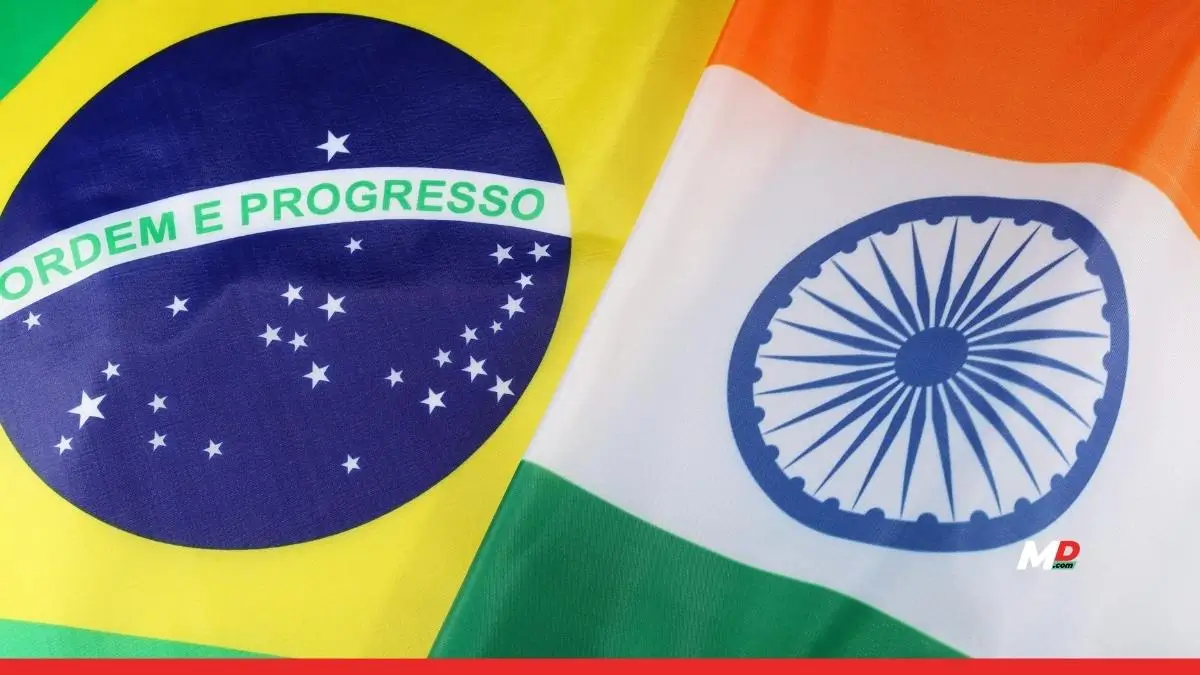
In a world increasingly defined by polarity, fragmentation, and geopolitical recalibration, the deepening partnership between India and Brazil emerges not just as a bilateral engagement but as a strategic recalibration. When Prime Minister Narendra Modi met President Luiz Inácio Lula da Silva in Brasilia, the optics were warm, but the subtext was clear: the Global South is not waiting for a seat at the table — it is building one of its own.
The leaders announced six key agreements spanning terrorism, defence, renewable energy, digital transformation, and classified information exchange. But this wasn’t mere diplomatic symbolism. From affirming a joint fight against terrorism — underpinned by a no-nonsense “zero tolerance and zero double standards” policy — to pledging to link defence industries and take bilateral trade to $20 billion in five years, this meeting was a signal to the world: the India-Brazil axis is becoming one of strategic consequence.
Counter-Terrorism: No Room for Ambiguity
Modi’s remarks on terrorism cut through with clarity and firmness. “We believe there is no place for ‘dohre maapdand’ (double standards),” he said, speaking from a place of moral conviction and global frustration. In a post-Operation Sindoor context — India’s targeted response to a terror strike — Lula’s reaffirmation of Brazil’s solidarity with India on terrorism lends important political weight to the issue.
The joint agreement on tackling international terrorism and transnational organised crime reflects a maturing of bilateral trust, expanding India’s counter-terror architecture beyond its immediate neighbourhood. This is not just about internal security; it’s about external signalling. In backing each other on such sensitive matters, the two nations are positioning themselves as reliable security partners in an increasingly volatile world.
Building Economic Bridges: The $20 Billion Ambition
India and Brazil are setting a clear commercial direction — one that moves past traditional resource trade into areas of deep technological and industrial cooperation. With two-way trade currently at $12.2 billion, the target of $20 billion is bold but believable. India’s exports of chemicals, pharma, diesel, and engineering goods meet Brazil’s needs, while Brazil’s raw materials — including crude oil, soya oil, and iron ore — feed into India’s growth story.
Modi’s metaphor — football for Brazil, cricket for India — wasn’t just a rhetorical flourish. It captured the spirit of synergy that the two leaders are hoping to foster. This is a story of complementary needs, cultural affinity, and collective ambition.
Digital Sovereignty and Defence Synergy
Perhaps the most forward-looking areas of collaboration are in the digital and defence sectors. As Brazil explores adoption of India’s UPI digital payments architecture, the idea is not just about replicating technology — it’s about empowering local systems through sovereign tech models. India’s willingness to share frameworks in digital public infrastructure and AI, and Brazil’s openness to integrate them, mark a new phase of South-South cooperation.
Similarly, in defence, Modi’s call to interlink industries is not off-the-cuff. It signals intent to move from transactional buys to collaborative manufacturing, especially in a world increasingly wary of overdependence on traditional Western suppliers. The trust that underpins such collaboration is rare, and both nations are clearly intent on nurturing it.
The Global South and the Moral Argument
What makes this India-Brazil engagement special is not just its bilateral depth, but its moral dimension. Modi’s comments about both nations having a responsibility to the Global South were not generic platitudes. As two vibrant democracies, India and Brazil are redefining the development agenda for emerging nations. Lula’s conferring of the Grand Collar of the National Order of the Southern Cross on Modi was not just a ceremonial honour — it was a signal of Brazil’s growing confidence in India’s global leadership.
In an era of digital colonisation, strategic ambiguity, and rising protectionism, the India-Brazil model offers an alternative: open, plural, democratic, and future-ready. If the West once led with capital, and China with scale, this new axis might just lead with values.
India and Brazil are not just aligning interests. They are aligning futures.