Travel
Did a Silent System Override Doom Air India 171?

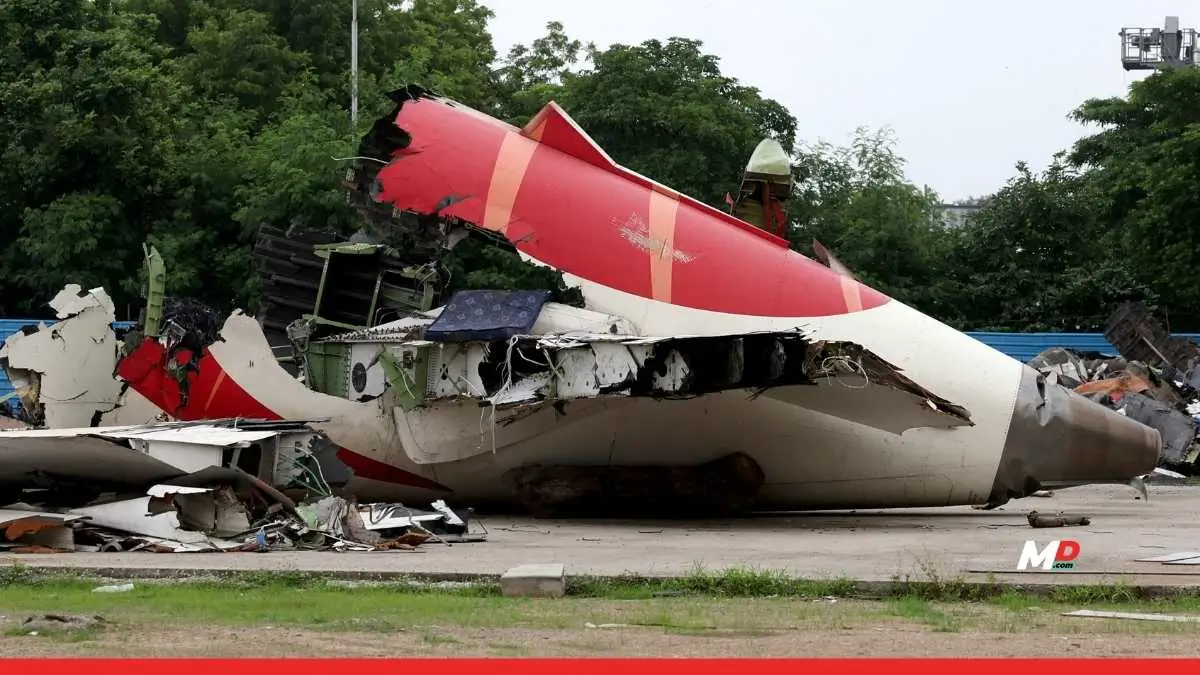
As investigators piece together the tragic final moments of Air India flight AI-171, which crashed shortly after takeoff from Ahmedabad on June 12, 2025, killing 260 people, one chilling question is emerging from the cockpit recordings and technical logs: Did a machine act on its own?
The cockpit voice recorder captured a startling exchange seconds before disaster struck. One pilot asked, “Why did you cut off?” to which the other replied, “I didn’t.” This single exchange has become the emotional and technical fulcrum of a fast-evolving investigation into whether a software or electrical failure prompted the uncommanded transition of the fuel control switches, effectively cutting off fuel supply mid-air.
The engine cut-off, if not manually commanded, could indicate a deeper systemic issue—possibly a sensor fault or a failure within the aircraft’s digital control systems like the FADEC (Full Authority Digital Engine Control). This possibility has triggered a wide-ranging investigation by India’s Aircraft Accident Investigation Bureau (AAIB), with assistance from global aviation experts and Boeing engineers.
A Sensor That May Have Spoken Too Soon
At the center of this hypothesis is a seemingly routine technical snag: a Stabilizer Position Transducer defect reported just hours before the doomed flight. The sensor, essential for aircraft pitch control, sends electrical signals to the flight control system. It had malfunctioned earlier that day on a Delhi–Ahmedabad flight operated by the same aircraft. Though maintenance engineers followed Boeing’s procedures to troubleshoot it, experts now question whether that issue was a symptom of a broader, cascading failure.
Investigators are probing whether this transducer or related components could have interfered with multiple systems, including falsely triggering the fuel control switches to move into the cut-off position. The aircraft’s EICAS (Engine Indication and Crew Alerting System) had flagged fuel system anomalies and false alarms in previous weeks—breadcrumbs that now form a critical “trail of errors.”
A Trail of Technical Trouble
AI-171’s aircraft had a history. In December 2024, the same Ahmedabad–Gatwick flight was grounded due to an “unresolvable electrical snag.” A few weeks prior to the crash, multiple technical issues were recorded—false fuel system warnings, software irregularities, and unusual alerts. One of the most concerning was a Cabin Air Compressor surge back in 2015, a known issue in Boeing 787-8 Dreamliners.
Each fault, in isolation, may have seemed manageable. But taken together, they now present a pattern. Investigators are focusing on whether repeated exposure to electrical glitches degraded sensor reliability or software logic within the flight control system. One possibility is a misinterpretation of signals by the aircraft’s microprocessors, prompting an automatic disengagement of critical safety locks—like those on the fuel control switches.
Between Human Protocol and Machine Autonomy
What complicates this tragedy is the razor-thin window between machine failure and human action. Preliminary data suggests the pilots acted according to protocol. From the yoke pullback to the flap and thrust lever operations, everything was executed per standard takeoff procedures. However, once airborne, the aircraft appears to have experienced an engine failure, possibly preceded by the fuel supply being cut. This was followed by the deployment of the RAT (Ram Air Turbine)—a last-resort power source—indicating severe electrical failure.
The FADEC system should have initiated auto-relight procedures, but could not do so without fuel. Despite the pilots’ efforts to cycle the fuel switch back to ‘run’, the aircraft never regained thrust. It crashed at just 625 feet altitude—far below the minimum threshold required to glide to safety using RAT-generated power.
There are no indications of pilot error or medical distress. In fact, the lone surviving passenger, seated in 11A, recounted feeling the plane “stalling after a loud bang,” seeing “flickering lights,” and sensing a desperate attempt to regain thrust.
The Future of Accountability and Automation
Air India has since conducted precautionary checks on all fuel control switch modules across its Boeing 787-8 fleet, finding no anomalies. But this crash has raised uncomfortable questions about modern aviation’s growing dependence on digital command systems. When systems fail silently, and when recorded data captures only electrical signals—not actual physical switch positions—accountability becomes murky.
This tragedy isn’t just a story of one aircraft’s failure. It’s a wake-up call for the aviation industry: to rethink how faults are tracked, how recurring issues are weighed cumulatively, and how pilots and engineers are trained to understand the increasingly autonomous behavior of today’s aircraft.
At 625 feet, the line between human and machine blurred. The investigation continues—but what’s already clear is that in the high-stakes world of aviation, no snag is ever truly small.