Politics
CJP speaks of police brutality, as protests ramp up

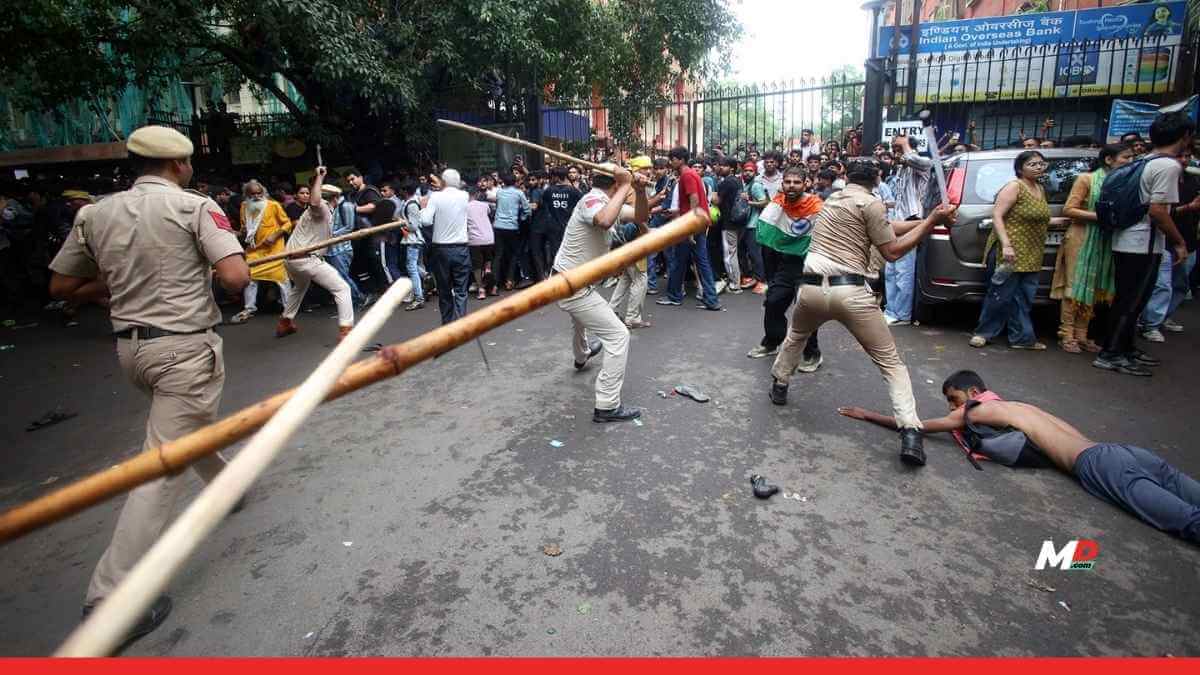
Monday’s ‘Sansad Chalo’ march by the Cockroach Janta Party (CJP) turned into one of the most volatile standoffs New Delhi has seen in years, and the fallout is still unfolding. What began as a satirical youth movement, born last May after Chief Justice Surya Kant compared unemployed graduates to ‘cockroaches’, has grown into the biggest domestic challenge Prime Minister Narendra Modi’s government has faced in his third term.
More than 10,000 protesters gathered at Jantar Mantar and tried to march towards Parliament, demanding Education Minister Dharmendra Pradhan’s resignation over the NEET-UG 2026 paper leak, which has affected two million students and been linked to around a dozen suicides. Anger had been building for weeks, but it boiled over after police forcibly moved 59-year-old hunger-striking activist Sonam Wangchuk to hospital on Saturday.
Beatings will continue till morale improves
Delhi Police responded to the march with tear gas and baton charges, footage of which was captured widely by international camera crews on the ground. One correspondent reported witnessing officers striking protesters, and quoted a demonstrator who said he saw several personnel kick a woman in the abdomen.
CJP founder Abhijeet Dipke has gone further, alleging that police assaulted minors, that a 12-year-old girl was struck on the head, and that a female protester was left in critical condition after being hit on the neck with a baton. He also alleged that Sonam Wangchuk’s wife, Geetanjali, was assaulted and dragged by her hair during a fresh baton charge on Tuesday morning.
Delhi Police have firmly denied that the crackdown was one-sided or orchestrated. They say more than 118 personnel, including senior officers, were injured after protesters pelted stones, attacked officers, and damaged police and government vehicles. FIRs have been registered at two police stations under rioting and public-property-damage provisions, and the force has released footage it says shows stone-pelting near Connaught Place.
CJP has raised questions of its own too, including asking where truckloads of stones near a heavily barricaded protest site came from, and alleging that Monday’s meeting between its delegation and Union Minister JP Nadda saw members’ phones confiscated and their movement restricted.
The protests spill over
The unrest was not confined to Delhi. Demonstrators gathered in Mumbai, Bengaluru, Pune and many more cities. Witnesses say police detained protesters and took them away in vans in Mumbai.
For now, Dipke has said the CJP will pause its marches, reportedly to avoid further confrontation, even as spokesperson Ashutosh Ranka insisted the agitation ‘will now grow bigger’ until Pradhan resigns. Separately, PM Modi has called for the strictest punishment for those responsible for the NEET paper leak itself, a demand that sits uneasily alongside unresolved questions about how his own government’s police force behaved on the streets of the capital. It is unclear on whose directive the massive police force was mobilised against the youth.
What is clear is that a movement which started as satire is now serious enough to warrant riot police, prohibitory orders, and a running argument over who started the violence. What remains unclear is when the government will offer accountability and action as opposed to empty promises. The protests continue, as India’s youth fight for their future.