

Politics
Sanctuary or Separation? How Two Elephants Sparked a Debate and a Supreme Court Enquiry

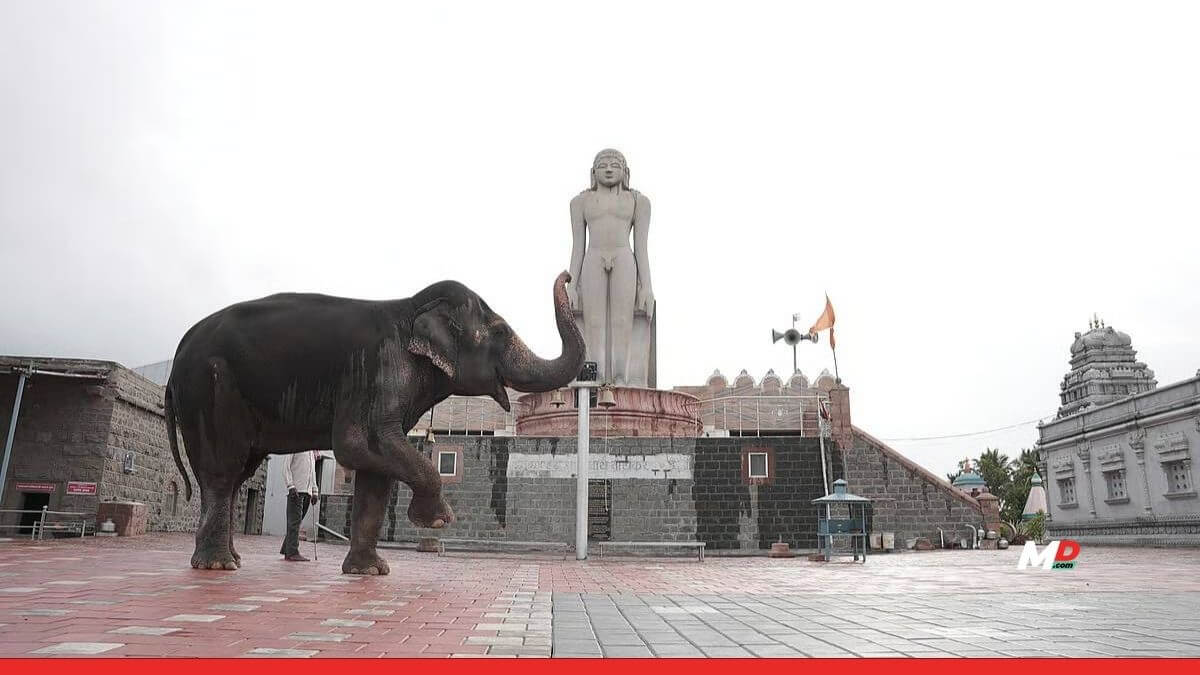
On a quiet morning in Kolhapur, the streets filled with people walking in silence. Priests in saffron robes, women in green saris, and groups of schoolchildren—all marched side by side, carrying banners that called for the return of one beloved figure: Mahadevi, the temple elephant.
Hundreds of kilometers away, in the villages of Maharashtra, another elephant named Madhuri became the center of heated debate. Her relocation from local care into Vantara, the Reliance Foundation’s sprawling animal rehabilitation initiative in Jamnagar, left her community divided—caregivers worried about losing tradition, while others welcomed the possibility of better welfare.
These are the two journeys—Mahadevi’s and Madhuri’s—that lifted a national debate from temple grounds into courtrooms, and eventually causing the Supreme Court of India to form an SIT to conduct a formal fact-finding enquiry.
The Departure
Mahadevi had been a fixture in Kolhapur’s temple life for years, her presence woven into rituals, processions, and prayers. Elders recall how children would feed her sugarcane after festivals, how she lowered her head gently when blessings were offered. Her sudden departure was more than a logistical change—it felt like a piece of the town’s soul had been removed.
Madhuri’s story unfolded differently. She was not as woven into ritual life as Mahadevi, yet her relocation sparked its own storm. Media reports drew attention to her transfer, prompting meetings at the highest level, with Maharashtra Chief Minister Devendra Fadnavis personally engaging with Vantara representatives. Her absence left villagers asking: who decides the future of an elephant—the community, the state, or the courts?
Also read: Vantara wildlife sanctuary: Conservation or corporate vanity?
Vantara: Sanctuary or Separation?
Both elephants now reside in Jamnagar, in Vantara’s 3,000-acre sanctuary designed with world-class enclosures, veterinary hospitals, pools, and dedicated nutrition programs. Supporters argue this is a blessing: elephants who once endured cramped spaces or overwork now roam in relative freedom, tended by experts.
But for Mahadevi and Madhuri’s communities, the sanctuary feels like separation. “An elephant is not only cared for with food and medicine,” one Kolhapur priest said. “She is cared for through tradition, through belonging. She is with us, in our prayers.”
This contrast—technical welfare versus emotional-spiritual belonging—sits at the heart of the protests. Silent rallies in Kolhapur for Mahadevi drew thousands. For Madhuri, the reaction was more political, rattling state leadership and compelling mediation. Together, the two elephants became symbols: one of cultural continuity, the other of state authority navigating public anger.
Courts Step Into the Debate
The debate might have remained local had it not been for a wave of petitions. Public Interest Litigations alleged that elephants were being transferred without full procedural transparency, sometimes bypassing wildlife safeguards. The controversy soon reached Delhi, where the Supreme Court recognized the scale of public disquiet and constitutional questions about wildlife governance.
In August, the Court appointed a Special Investigation Team (SIT) to probe all allegations against Vantara. Its mandate: to establish whether the transfers respected law, ecology, and culture—and to recommend protocols for the future.
The SIT’s work now extends beyond Mahadevi and Madhuri. But they remain the emotional anchors of the inquiry, the living reminders of what’s at stake.
Mahadevi, Madhuri, and a Nation’s Dilemma
Together, their stories shine a light on the broader question: Who decides the destiny of elephants in India?
Communities argue that elephants are sacred guardians, inseparable from spiritual life.
Sanctuary leaders insist that welfare—nutrition, medical care, space—must override sentiment if suffering is to be reduced.
Courts and governments face the impossible task of reconciling the two, ensuring legality while honoring cultural bonds.
The nation is caught in a delicate conversation where numbers and emotions hold equal weight. You can measure the calories in an elephant’s diet, but can you measure the silence that follows her departure from a temple?
Waiting for Answers
For now, Mahadevi and Madhuri walk new paths in Jamnagar—possibly splashing in lagoons, grazing in enclosures, adjusting to a life of curated care. Back home, their absence lingers like unanswered prayer. The Supreme Court’s SIT will, in time, deliver its findings. But beyond verdicts, the country waits for something deeper: a framework that respects both compassion and culture.
Perhaps, years from now, we will not remember this as the story of elephants taken and lost. Perhaps it will be remembered as the moment India found balance between love, law, and responsibility.
Until then, Mahadevi and Madhuri remain at the heart of a national reckoning, two elephants carrying not just their own histories, but the weight of a country’s conscience.