

Environment
Climate Experts Warn Climate Change Is Intensifying, Compounding Global Risks

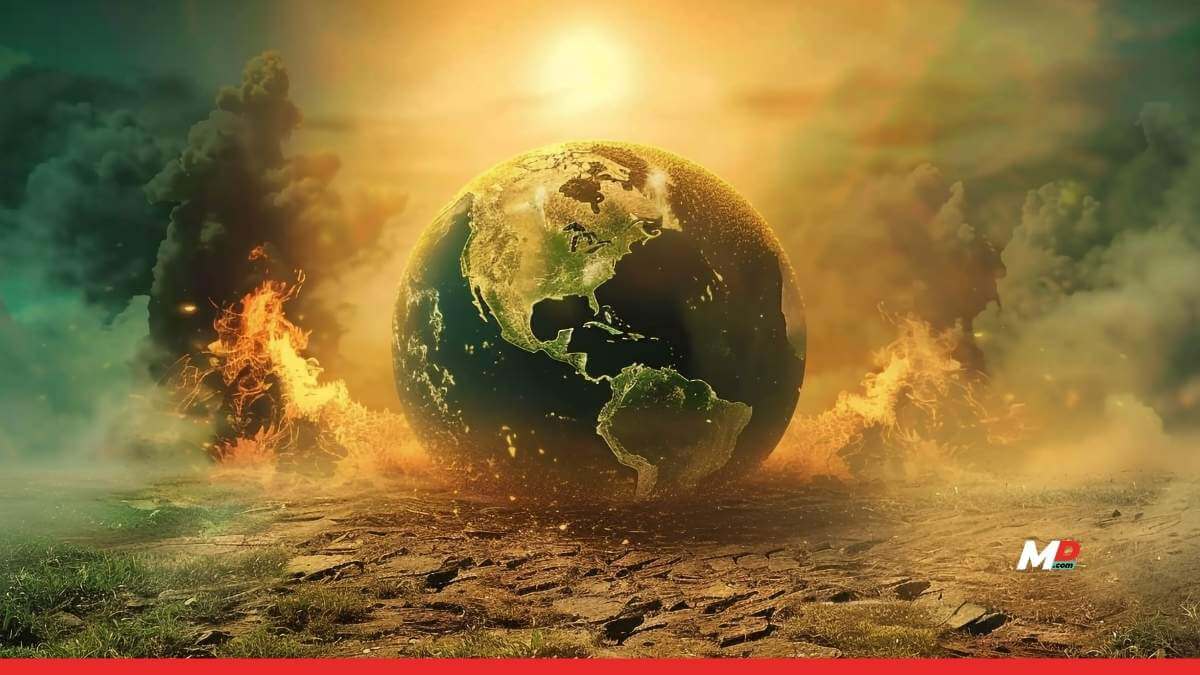
As the world enters the latter half of the 2020s, climate change is no longer just a looming threat; it is a phenomenon reshaping the global landscape in relentless and interconnected ways.
Recent data from leading bodies such as the United Nations Environment Programme (UNEP), the Intergovernmental Panel on Climate Change (IPCC), and the Copernicus Climate Change Service demonstrate unequivocally that while climate change is not always introducing completely new types of risks, it is exponentially intensifying existing ones, creating compounding crises that ripple across societies, economies, and ecosystems.
Also read: India Needs $1.5 Trillion for Climate Action: Deloitte
A World Marked by Compounded Extremes
The past decade has seen a steep rise in the severity and frequency of adverse events. While some early discussions about climate change focused on “new” hazards, leading experts warn that the greatest peril now lies in the exacerbation of familiar risks: severe heatwaves, droughts, floods, wildfires, coastal erosion, and ecosystem collapse.
The Climate Risk Index 2025 flags that the world is not only breaking annual records for high temperatures and sea surface heat but is also witnessing droughts and rain events at historic scales. For instance, 2024 was officially the hottest year on record, marking the first year where global average temperatures exceeded the critical threshold of 1.5°C above pre-industrial levels—a milestone that, according to the latest IPCC report, was not anticipated until later in the decade.
Why Intensification, Not Novelty, Is the Primary Threat
Intensification refers to the amplification of existing climate risks. For example, more frequent and powerful heatwaves lead to cascading effects—water scarcity, crop failures, health crises, and increased wildfire threat—across urban and rural populations alike. Coastal cities face storm surges and chronic flooding with alarming regularity. These intensifications are particularly dangerous because societies, even those prepared for “typical” risks, are finding their resilience stretched thin by the magnitude and clustering of extreme events.
Across the globe, climate change is amplifying the water cycle, leading to heavier downpours in some regions and more severe droughts in others. For urban areas, hotter conditions combine with urban “heat island” effects, making cities warmer and more susceptible to flash floods from intense rain events.
Disproportionate Impacts on Vulnerable Populations
While climate risks intensify everywhere, their impacts are not evenly distributed. The most vulnerable regions—often the poorest and least able to adapt—bear a disproportionate share of the impacts. Rising temperatures threaten food and water security, drive mass migrations, and strain fragile political systems. The layering of risks can create “tipping points” for communities, pushing them past the limits of their coping mechanisms.
Feedback Loops and Irreversible Changes
Several critical climate system components are now at risk of entering irreversible change: Arctic sea ice loss, thawing permafrost, and disruptions to ocean currents. Each intensifies global warming through positive feedback mechanisms and further heightens climate risks. These changes occur alongside accelerating sea level rise, which turns once-in-a-century flooding into a near-annual event for coastal cities—even putting the survival of some small island nations into immediate question.
What’s at Stake and Why Global Collaboration Matters
The Global Risks Report 2025 underscores that with every incremental rise in temperature, adverse social, economic, and health impacts are escalating. The IPCC and allied scientific networks are clear: much of the world’s infrastructure, food supply, and economic output are at risk as the climate crisis shifts into a critical and unpredictable phase.
The window for limiting global warming to 1.5°C is rapidly closing. Without urgent and comprehensive mitigation—particularly reductions in fossil fuel use and green investments—countries will struggle to manage the layered threats of water scarcity, food insecurity, population displacement, and economic instability.
The Path Forward
Adaptation remains crucial but is no substitute for dramatic emissions reductions. Global leaders, businesses, and communities must accelerate decarbonization, invest in renewable energy, implement robust adaptation plans, and ensure a just transition for vulnerable workers and communities. Only with international cooperation and ambitious action can we hope to curb the compounded, intensifying impacts of climate change.