
Leadership
Why Do Billionaires See New Zealand as the Ultimate Apocalypse Escape Plan?

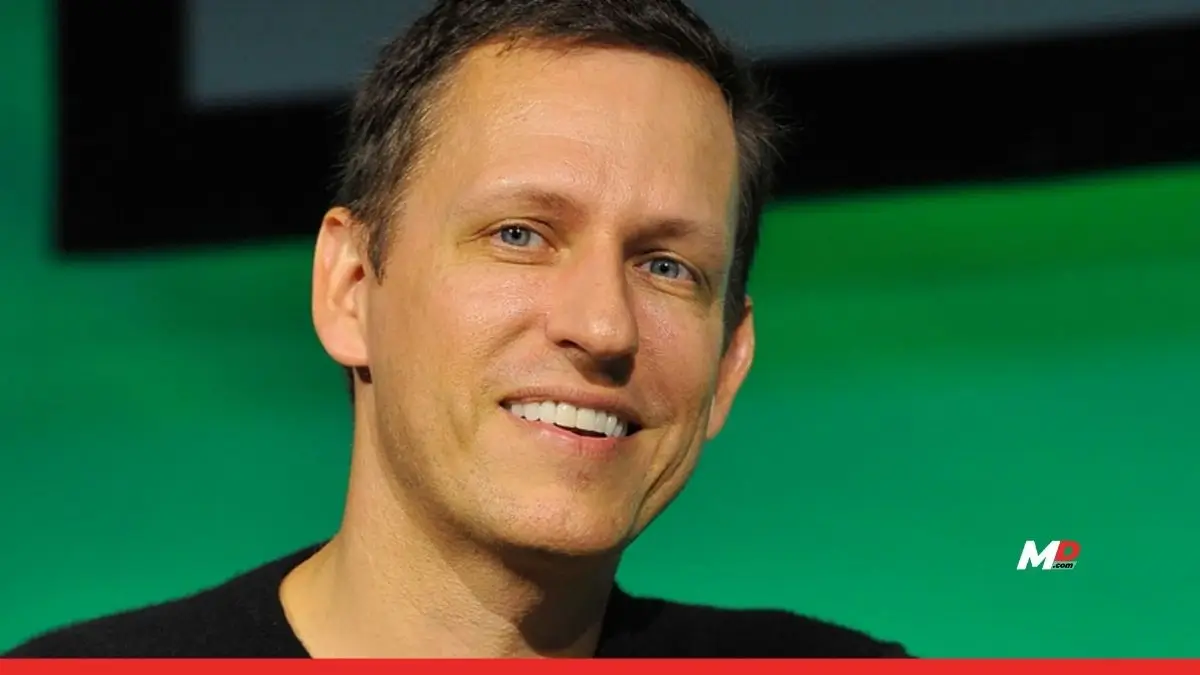
While other billionaires bought superyachts and private islands, Peter Thiel quietly acquired something different: New Zealand citizenship. He had spent just 12 days in the country. There was no fanfare. But for Thiel, this wasn’t a move of luxury or leisure. It was a contingency plan.
Thiel, co-founder of PayPal and one of Silicon Valley’s most provocative thinkers, has long believed the modern world is on the brink. Economic instability, AI disruption, civil unrest, even a collapse of the nation-state—these aren’t hypothetical to him. They’re inevitabilities. And when that collapse comes, Thiel wants to be prepared.
To understand why one of the tech world’s most influential figures is planning for the end of society as we know it, you have to understand the ideological engine behind it: The Sovereign Individual.
The Book That Changed Everything
Published in 1997 by James Dale Davidson and Lord William Rees-Mogg, The Sovereign Individual predicts that the rise of digital technology would erode the power of governments, empower a “cognitive elite,” and eventually render nation-states obsolete. The rich would retreat into secure enclaves, liberated from taxes, regulation, and democratic accountability.
Thiel doesn’t just admire the book—he lives by it. He has cited it as his greatest influence. He believes that freedom and democracy are incompatible. He’s invested in projects like the Seasteading Institute, which proposed building private, floating cities in international waters. And he sees New Zealand as a real-world expression of this ideology: an ideal stronghold for the “sovereign individual” in a world spinning off its axis.
In 2015, Thiel bought nearly 500 acres of land on Lake Wānaka and began modifying a Queenstown mansion, reportedly adding a panic room. He wasn’t alone. Other tech elites, including Sam Altman and Reid Hoffman, began laying similar plans. But it was Thiel who set the tone: the first to act, and perhaps the most serious.
A Symbol of Something Bigger
In many ways, Thiel is more than just a billionaire planning for collapse—he is a symbol of the belief that collapse is both inevitable and, in some ways, deserved. He is the architect of an ideology where the smart few survive while the rest are left behind. It’s not simply about safety. It’s about sovereignty. About control.
For Thiel, New Zealand is more than a refuge. It is a blank canvas. A place with few geopolitical enemies, abundant natural resources, and a government small enough to influence. In 2011, he secured citizenship through a rarely used clause, promising to invest in New Zealand’s tech sector. He never had to live there. The ceremony was held in a consulate in Santa Monica.
To some, this might seem like paranoia. But to Thiel, this is just prudence. And therein lies the unsettling truth: when someone as connected, analytical, and powerful as Thiel begins planning for systemic collapse, it’s worth asking what he sees that others don’t.
The View From the Other Side
Not everyone in New Zealand shares Thiel’s vision. Māori legal scholar Khylee Quince has argued that billionaires like Thiel treat New Zealand as a “utopia”—a word that, for indigenous communities, signals erasure. It’s the same colonial logic wrapped in digital libertarian language: viewing land as unclaimed, available for extraction, a safe zone for the elite.
Others, including artist Simon Denny and political theorist Max Harris, have challenged Thiel’s presence with works like The Founder’s Paradox, a gallery exhibition exploring Thiel’s ideology through game-like sculptures. When Thiel himself visited the exhibition in secret, he reportedly found it disturbing, perhaps seeing, for the first time, how dystopian his own worldview appears when refracted through art.
What emerges from these encounters is not just a critique of one man, but of a mindset—a belief that wealth can outsmart catastrophe, that sovereignty means separation, and that the future belongs to those who can afford to opt out.
What Thiel’s Escape Plan Means For Us
Peter Thiel is not a typical doomsday prepper. He is a venture capitalist, a political influencer, and a digital ideologue. His plans for New Zealand aren’t just personal—they’re symbolic. He sees the systems we’ve built—governments, social contracts, even democracy itself—as outdated operating systems in need of replacement. And he’s not waiting for the reboot. He’s already building his firewall.
But here’s the question: If the people shaping our future believe it is doomed, what happens to the rest of us? If New Zealand becomes a lifeboat for billionaires, what does that say about the ship?
Peter Thiel’s presence in New Zealand is not just about land. It’s about ideology, inequality, and power. It’s a warning, not just of what could collapse, but of who’s planning to survive it.