
Politics
India, US on Brink of Interim Trade Deal as July 9 Tariff Deadline Nears

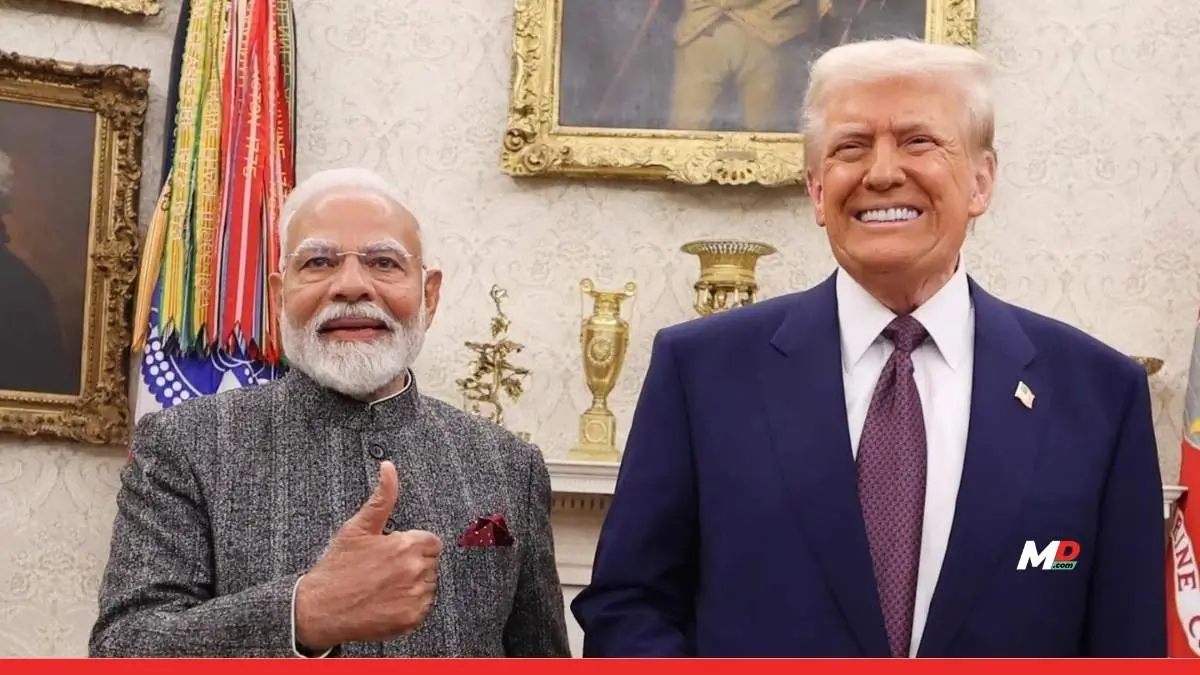
As Washington and New Delhi move closer to finalising a much-anticipated interim trade deal, a quiet but high-stakes diplomatic ballet is unfolding—one that could reshape the contours of economic cooperation between two of the world’s largest democracies. With just days left before a July 9 tariff deadline, Indian negotiators are working overtime in Washington, carefully balancing international expectations with deeply rooted national interests.
This is not just a trade conversation—it’s a political test, an economic turning point, and a reaffirmation of India’s commitment to protecting its most vulnerable sectors.
How We Got Here: The History Behind the Headlines
The current negotiation cycle traces back to 2018, during the Trump administration, when the United States imposed tariffs on steel and aluminum imports from several countries, including India. In retaliation, India levied reciprocal tariffs on a range of American goods. This tit-for-tat tariff war simmered for years without resolution, even as both economies remained interdependent.
In February 2020, Prime Minister Narendra Modi and President Donald Trump agreed to work toward a broader Bilateral Trade Agreement (BTA). However, the COVID-19 pandemic and domestic political shifts slowed progress. Fast forward to 2024, and talks resumed with renewed urgency. A 90-day suspension of the 26% reciprocal tariffs—set to expire on July 9, 2025—offered a narrow but critical window to hammer out an interim deal.
With the clock ticking, India has made it clear: national interest cannot be compromised, even in the face of mounting pressure from Washington.
Lines in the Sand: What’s at Stake?
At the heart of the deadlock are two diverging visions of fair trade.
The US wants India to reduce tariffs on American agricultural exports, including corn, wheat, and dairy products. Washington is particularly keen on gaining access to India’s lucrative dairy market—something New Delhi has never conceded in any free trade agreement. This sector, dominated by small-scale rural farmers, remains a political and economic red line for India due to its impact on livelihoods and food security.
Genetically modified crops, another US demand, are a major sticking point. India’s hesitancy is not just economic but regulatory and cultural, reflecting concerns over long-term ecological and health consequences.
India, meanwhile, is pushing for something far more aligned with its growth agenda: meaningful tariff concessions on labour-intensive sectors such as leather, textiles, garments, and footwear. These are crucial for employment generation, especially as India eyes doubling its exports to the US and meeting its ambitious goal of $500 billion in bilateral trade by 2030.
An Interim Deal, With Long-Term Implications
According to sources, the contours of the proposed interim deal are becoming clearer. Both sides have reportedly agreed to exclude sensitive Indian sectors like agriculture and dairy from this first-phase agreement. Instead, the focus has narrowed to reciprocal tariff reductions, with India seeking relief on steel tariffs and enhanced market access for its small- and medium-scale exporters.
In return, India may offer concessions on non-tariff barriers and certain customs regulations, providing the US a foothold while retaining its strategic autonomy.
Ajay Sahai, CEO of the Federation of Indian Export Organisations (FIEO), believes this deal could be a game-changer. “Our estimate is that once the Interim India-US Trade Deal is finalised, Indian exports to the US will double within the next three years,” he told NDTV.
Even US President Donald Trump weighed in this week, saying, “I think we are going to have a deal with India… it is going to be a deal where we are able to go in and compete.”
Looking Ahead: Diplomacy Over Deadlines
Yet, not everything is guaranteed. A senior Indian official, speaking to Reuters, stated firmly, “In every negotiation, national interest is supreme.” It’s a sentiment that sums up India’s current posture: open to progress, but not at any cost.
Even if the July 9 deadline passes without a deal, Indian negotiators are confident that the 26% tariff—while undesirable—is not debilitating. Compared to peer economies, India’s exporters remain competitive even under such constraints.
Talks are expected to continue through early autumn, with both sides hoping that this interim agreement serves as a foundation for a comprehensive trade pact by late 2025.
The Real Win: Balance Over Concession
In the end, this isn’t just about trade balances or tariff sheets. It’s about trust, vision, and sovereignty. India’s insistence on protecting its dairy and agricultural sectors is not regressive—it’s responsible. These are sectors that employ hundreds of millions and form the cultural and nutritional backbone of the nation.
The ability to say “yes” to progress while firmly saying “no” where it matters is what will define the success of these talks.
As the world watches, India is quietly scripting a trade doctrine of its own: one built not on blind alignment with superpowers, but on strategic assertion, sustainable policy, and an unflinching commitment to inclusive growth.