Sports
3 iconic moments from India Pakistan T20 World Cup matches

The upcoming T20 World Cup faces an unusual predicament. For the first time in years, the schedule does not guarantee a clash between India and Pakistan, as Pakistan have officially announced their decision to boycott the group stage match, much to the consternation and dismay of the ICC. After all, the ICC is reportedly staring at a financial deficit of a staggering $250 million without this marquee fixture to anchor the tournament revenue.
While the economics of cricket rely heavily on this rivalry, the sport itself misses something far more vital when these two giants do not meet on the field. The narrative of India versus Pakistan has often been reduced to lopsided contests in the last decade, yet history is punctuated by moments where the game transcended sport and became theatre. As fans prepare for a tournament potentially devoid of this adrenaline, we look back at three instances where the rivalry lived up to every ounce of the hype.
A comedy of errors: The T20 World Cup, 2007
The first chapter of this modern legacy was written in Durban during the inaugural World T20 in 2007. It was a time when the format was still a novelty, viewed with skepticism by purists and curiosity by the masses.
The group stage match between the arch-rivals ended in a tie, a result that today would lead to a Super Over. Back then, however, the rules dictated a bowl-out. It was a spectacle that borrowed more from a penalty shoot-out in football than anything in the distinguished history of cricket.
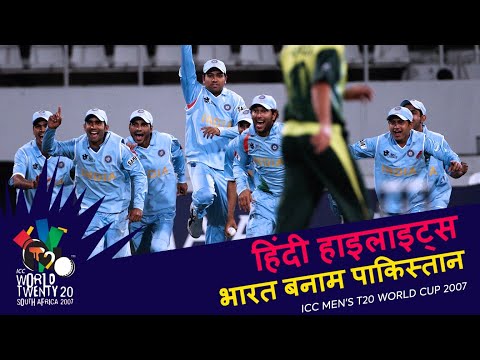
The situation was farcical yet gripping. India had prepared for this eventuality. MS Dhoni, in his first assignment as captain, knelt behind the stumps while his makeshift bowlers took aim. The difference in preparation was stark.
The Indian contingent of Virender Sehwag, Robin Uthappa, and Harbhajan Singh approached the stumps with the precision of spin bowlers, focusing simply on hitting the target. Pakistan seemed unsure of the mechanics. Yasir Arafat, Umar Gul, and Shahid Afridi steamed in with their full run-ups, struggling to adjust their radar for an unguarded set of stumps.
The result was a 3-0 clean sweep for India. It was bizarre, it was entertaining, and it set the tone for a tournament that would change cricket forever.
A humdinger at the Wanderers: The T20 World Cup final, 2007
Ten days later, the two teams met again in Johannesburg for the final. If the bowl-out was a comedy of errors, the final was a thriller scripted by a master dramatist.
India, without major stars and relying on a young core, posted a modest total of 157. Gautam Gambhir anchored the innings, but the score felt par at best on a good batting surface. Pakistan appeared to be cruising until the pressure of the final began to dismantle their middle order.
The match came down to the final over. The doughty Misbah-ul-Haq, who had been the solitary warrior to stand and be counted for Pakistan, had dragged his team to the brink of victory.
India were almost down and out. With Pakistan needing 13 runs off the last over, Dhoni handed the ball to Joginder Sharma, an inexperienced medium pacer. The tension was palpable and suffocating.
Misbah signalled his intent by hitting a massive six down the ground, reducing the equation to six runs off four balls. The trophy was one hit away.
And then came the moment frozen in time.

Misbah attempted a scoop shot over fine leg, a high-risk maneuver he had executed perfectly throughout the tournament. This time though, he failed to get the desired connection. The ball floated eerily into the hands of Sreesanth at short fine leg. India had won the World Cup by five runs. That victory birthed the IPL and revolutionized the cricket economy, but for the fans, it remained the gold standard of T20 finals.
Kohli’s Masterclass: T20 World Cup, 2022
Years passed, and the rivalry became sporadic due to geopolitical tensions. Matches became predictable. Then came October 23, 2022, at the Melbourne Cricket Ground. 90,000 fans packed the arena for a match that seemed lost for India. Chasing 160, India had collapsed to 31 for 4. The Pakistani pace attack, led by Haris Rauf and Shaheen Afridi, was breathing fire. The required run rate climbed to impossible levels, beyond mere mortals.
Enter Virat Kohli. In an innings that defied probability, Kohli constructed a path to victory that simply should not have existed. The equation boiled down to 28 runs needed off 8 balls. Haris Rauf was bowling the 19th over with intimidating pace. And then, Kohli produced two shots that defied physics.
Virat Kohli magic at the MCG 🪄 #cricket #t20worldcup #cricketshorts
The first was a back-foot punch straight back over the bowler’s head for six, a shot of such audacity that it left Rauf stunned. The second was a flick over fine leg, but it was one of such balance and beauty that it left the crowd roaring for more, and the Pakistani team wondering what India’s champion had in store for them.
The final over was a blur of chaos, no-balls, wides, and smart running. And when Ravichandran Ashwin lofted the final ball over mid-off for the winning run, the MCG erupted. It was not just a win; it was a resurrection of the rivalry’s intensity. Kohli punched the ground, overcome with emotion. It was a reminder that while administrative issues might keep these teams apart, the game itself creates magic when they collide.
These three moments serve as a testament to what the world misses when India and Pakistan do not play. It is never just about the revenue or the broadcast numbers. It is about the unscripted drama of a bowl-out, the heartbreak of a mistimed scoop, and the brilliance of a master batter conquering the impossible at the MCG.