Explainer
What is ‘Temple’, Deepinder Goyal’s new Brain Wearable?

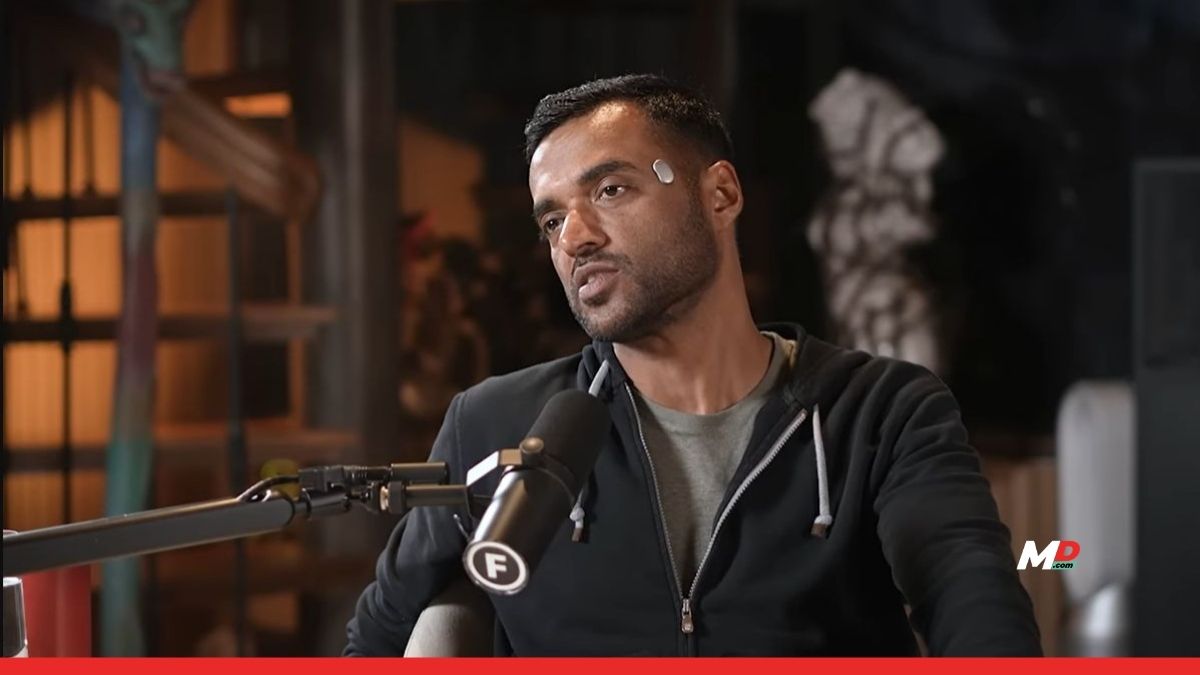
This story explores the launch of Temple, a new brain monitoring wearable startup by Zomato founder Deepinder Goyal. The company recently secured significant funding and has sparked widespread discussion online due to its strict physical fitness requirements for prospective employees.
Deepinder Goyal is making a major shift in the technology and wellness sectors with his new health startup, christened Temple. The founder recently stepped down from his position as chief executive officer of Zomato and its parent company Eternal, transitioning to a vice chairman role. This move allows him to focus on ambitious and experimental projects, with Temple being the most prominent. The startup is developing a non-invasive wearable device designed to be worn near the forehead to monitor cerebral blood flow and oxygen levels in real time.
The financial backing for this venture is substantial. Temple recently raised $54 million in a seed funding round, bringing the valuation of the company to $190 million. The funding was led by Goyal himself, who invested a significant portion of his personal capital. Other major participants include Steadview Capital, Peak XV Partners, Dharana Capital, and Info Edge Ventures. Several well-known founders and early-stage investors also joined the round, such as Vijay Shekhar Sharma, Kunal Shah, and Nikhil Kamath. Over thirty employees of the startup also contributed their own money at the same valuation, a move Goyal highlighted as a sign of immense belief in the project.
Temple is rooted in a concept Goyal refers to as the gravity ageing hypothesis. This theory suggests that the constant downward pull of gravity over a person’s lifetime gradually reduces the effectiveness of blood circulation to the brain. According to the research driving the startup, this decline in cerebral blood flow might contribute significantly to cognitive decline and the overall ageing process. The device aims to provide continuous data on how lifestyle, posture, and daily activities affect brain circulation.
The wearable technology market is already highly competitive with established companies focusing on heart rate and sleep tracking. Temple intends to bypass these standard metrics to carve out a new category centered specifically on continuous brain wellness. While it is currently positioned as a research prototype rather than a certified medical device, the ultimate goal is to create an advanced tool for elite athletes to track metrics that no other existing gadget can currently measure.
The company recently launched a hiring drive that quickly went viral across the internet. Goyal announced openings for highly specialized engineering and scientific roles, including computational neuroscientists, embedded systems engineers, and machine learning specialists.
However, it was the strict physical eligibility criteria that generated massive attention. Prospective employees must take their physical fitness seriously, with male applicants required to have less than 16% body fat, and female applicants required to have less than 26% body fat.
Goyal explained the reasoning behind this unconventional mandate by stating that they are building products for people who push their bodies to the extreme limits. He emphasized that the engineering team needs to be composed of such individuals, rather than simply serving them. Those who possess the right technical skills, but do not currently meet the fitness standards are still actively encouraged to apply. They will be placed on a three-month probation period to reach the required health metrics.
The internet responded with a mix of support and humor. The backlash saw some observers question the relevance of physical fitness to building software and hardware, arguing that empathy and technical craft are more important than personal health metrics. Others joked that achieving such low body fat percentages would require deleting food delivery applications altogether.
Despite the debate, the bold recruitment strategy underscores the intense, high performance culture Goyal intends to cultivate at Temple. The startup is firmly positioning itself at the intersection of deep technology and extreme human performance, aiming to completely redefine the future of longevity research.