Business
The engineering skills India will actually need by 2030

Article Summary
- India’s next phase of growth will require engineers who can work across AI, semiconductors, robotics, advanced manufacturing, cybersecurity, climate technology, and digital infrastructure.
- The challenge is no longer simply producing more engineers, but building deeper capabilities in problem-solving, systems thinking, research, product development, and multidisciplinary collaboration.
- As AI changes the nature of technical work, engineering judgement, resilience, and the ability to connect technology with real-world outcomes could become more valuable.
- The skills India develops today will determine whether it remains primarily a technology services powerhouse or becomes a builder of globally competitive technologies and products.
India has never really had an engineering shortage. What it may have by 2030 is a shortage of the right kind of engineering capability.
For decades, the country’s engineering advantage was built around scale. A vast pool of technically trained graduates helped India become a global hub for software services, IT consulting, engineering services, and technology outsourcing. That model created enormous economic value.
The next phase of India’s growth will demand something more complicated. AI, semiconductors, robotics, advanced manufacturing, cybersecurity, clean energy, electric mobility, space technology, and increasingly sophisticated digital infrastructure are changing what an engineer needs to know. Technical competence remains fundamental, but it is no longer sufficient on its own.
The engineer of 2030 will need to understand systems, work alongside AI, communicate across disciplines, and increasingly think like a designer, researcher, and problem-solver.
From degrees to capabilities
India produces a large number of engineering graduates every year, yet employers have long highlighted the gap between academic preparation and workplace requirements. The issue is partly about curriculum, but it is also about the nature of engineering itself.
A semiconductor engineer needs knowledge spanning electronics, materials, manufacturing, and increasingly software. A robotics engineer sits at the intersection of mechanical engineering, electronics, control systems, computer vision, and AI. A climate-tech engineer may need to understand energy systems, data, materials, economics, and regulation.
The boundaries between disciplines are becoming increasingly porous. That makes multidisciplinary thinking one of the most valuable skills India can cultivate. The same applies to product thinking. Engineers increasingly need to ask not only whether something can be built, but whether it should be built, who will use it, what problem it solves, how it can scale, and what its environmental and economic consequences might be.
AI changes the equation
Artificial intelligence is perhaps the biggest variable in this transition. AI can increasingly assist with coding, simulation, design, testing, documentation, and other tasks that once consumed significant amounts of engineering time. That does not make engineers less important, but it does change where their value lies.
The premium could increasingly shift towards engineers who can frame problems correctly, evaluate AI-generated solutions, understand complex systems, make trade-offs, and take responsibility for outcomes.

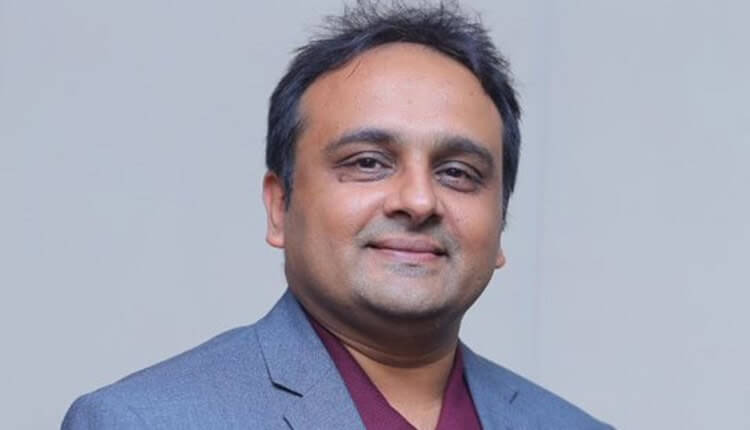
There is also a less visible challenge emerging within India’s digital economy. As Milind Shah, Managing Director, Randstad Digital – India, puts it, “There’s a quiet competition happening for India’s digital engineering talent that rarely gets discussed, and it isn’t between companies; it’s between disciplines. The same engineer capable of architecting core digital systems, platforms, and infrastructure is increasingly being pulled toward the most visible layer of tech: AI and product roles, simply because that’s where the career narrative and compensation currently point. So, while India produces some of the world’s strongest digital engineering talent, the unglamorous but critical work of building resilient platforms, systems architecture, and digital infrastructure is now competing against more visible, headline-grabbing roles. India’s digital economy cannot run on application-layer talent alone; it needs digital engineers choosing to build the infrastructure layer too, and right now, we’re not making that choice attractive enough. It is important to bridge this gap before it becomes the bottleneck for India’s digital ambitions.”
That observation points to a broader issue. Economic transformation depends on capabilities that are often less visible than the applications built on top of them.
Cloud infrastructure, semiconductor design, power systems, data centres, networks, industrial automation, cybersecurity, and physical infrastructure rarely generate the same excitement as consumer-facing AI products. Yet they determine whether those products can function reliably at scale.
Building for a more physical economy
India’s engineering story is also becoming increasingly physical. The country’s ambitions around semiconductor manufacturing, electronics, electric vehicles, aerospace, defence, renewable energy, batteries, and advanced manufacturing will require engineers who can design, prototype, test, manufacture, and improve physical systems.
This represents an important evolution. India’s technology success has often been associated with software. Its next opportunity could lie in bringing together software and hardware at scale.
That will require stronger industry-academia collaboration, more exposure to real-world manufacturing, better laboratories and testing infrastructure, and greater emphasis on research and experimentation.
It will also require engineers who understand that innovation does not end when a prototype works. Commercialisation, reliability, cost, supply chains, safety, maintenance, and scale are all engineering problems.
Engineering a resilient future
Climate change adds another dimension. India will need engineers capable of designing cities, buildings, transport systems, power networks, factories, and water infrastructure that can withstand greater environmental stress. Energy transition, resource efficiency, battery technology, carbon management, and climate-resilient infrastructure will create entirely new engineering challenges.


This is where engineering’s traditional role as the bridge between scientific knowledge and practical solutions becomes particularly important. As AS Prasad, Vertiv India Vice President – Product Management says: “Engineers’ are the architects of progress, turning bold ideas into practical solutions that shape our everyday lives. At Vertiv, we deeply value their relentless curiosity and commitment to innovation, which powers the digital infrastructure of today and prepares us for the AI-driven future. Their expertise ensures that industries operate seamlessly, sustainably, and resiliently building a stronger, interconnected India. On Engineers’ Day, we celebrate their spirit of problem-solving and their vital role in driving responsible growth and technological transformation.”
The engineer India needs next
By 2030, the most valuable engineering skills may therefore be less about mastering a single technology and more about combining several capabilities.
AI literacy will matter. So will cybersecurity, robotics, semiconductor design, advanced manufacturing, data, and climate technology. But alongside them will sit less fashionable skills: systems thinking, communication, critical reasoning, experimentation, project management, product thinking, and the ability to work across disciplines.
The fundamental question for India is therefore bigger than how many engineers it produces. It is whether those engineers are equipped to build. If India’s ambition is to move from being a major technology services economy to a country that designs and builds globally competitive products, infrastructure, and technologies, engineering capability will be one of its most important strategic assets.
The engineers graduating today will help determine what that India looks like in 2030 and beyond. And their biggest advantage may not be knowing every technology that exists today. It may be knowing how to solve the problems that do not yet exist. It is a gargantuan challenge, but one they must be equipped to surmount.